Should You Start Studying HEMA?
Part 1. What is HEMA?
In a strict technical sense, what is now called “HEMA” is an acronym which stands for “Historical European Martian Arts.” The Swedish HEMA Association has offered a definition of what constitutes HEMA; here is a quotation about this matter as it appears on Wikipedia’s entry about contemporary HEMA: “The Swedish HEMA Association Svenska HEMA-Förbundet defines HEMA as any European martial art predating 1950 that has a living tradition or has preserved source material.”
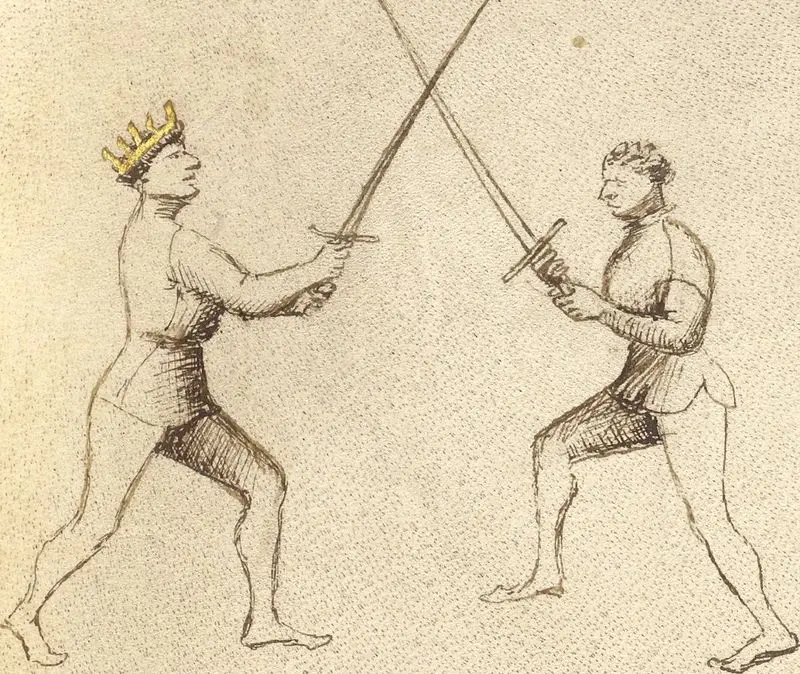
Image courtesy of Wikipedia.org
A Note About Pankration:
Under the definition that is provided by the Svenska HEMA-Förbundet, many traditions and practices would fall under the definition of “HEMA,” including ancient Greece’s Pankration tradition of fighting. However, in a very practical sense, Pankration seems to be a bit different entity than HEMA within today’s world. Many scholars have noted that the actual information which still survives and relates to Pankration is fragmentary and a bit uncertain. Despite modern Pankration’s uncertain historical roots, many contemporary martial arts schools are offering training in ancient Greek Pankration fighting methods. Pankration’s system of fighting consists of punches, kicks, joint-locks, and throws.
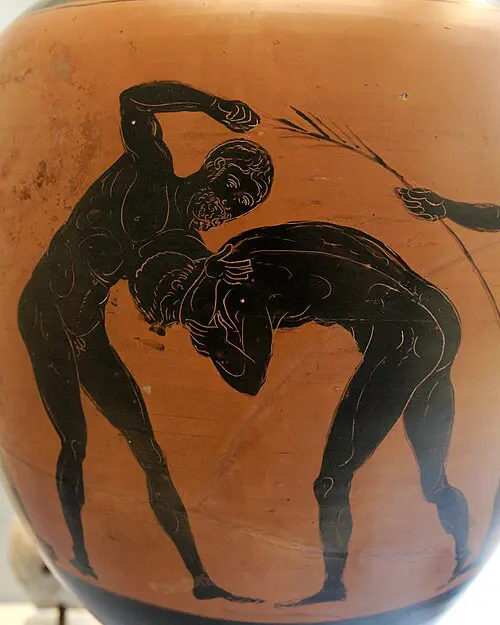
Image of ancient Greek Pankration furnished courtesy of Wikipedia.org
Pierre de Cuoubertin pushed for Pankration to be included as an Olympic sport 1896, but his efforts were never rewarded. In 1969, an American of Greek descent named Jim Arvanitis began to promote and teach Pankration in the Boston metropolitan area. On November 5, 1973; Arvanitis appeared on the cover of Blackbelt Magazine which then inserted Pankration into the public’s mind. Arvanitis proceeded to renew interest in Pankration from 1973 forward, and he developed a school of fighting arts that is called “Neo Pankration.” Neo-Pankration simply expounds upon old historical Pankration techniques and it incorporates some newer concepts that are borrowed from different fighting arts from around the world.
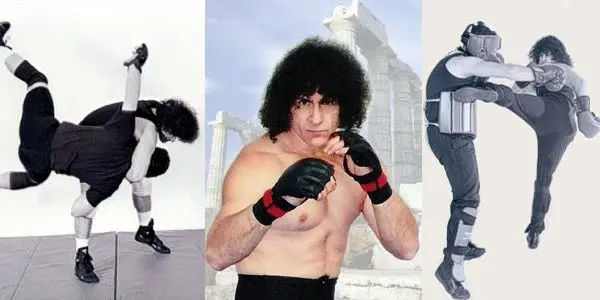
Image of Jim Arvananitis furnished courtesy of usadojo.com
Dozens of Pankration schools now exist across North America such as the Armac Spartan Pankration Academy in Quebec. As of this time, Pankration has basically been absorbed into the fold of more conventional Mixed Martial Arts training programs, so very few dedicated and traditional Pankration training programs now exist in the contemporary world. The nation of Greece now offers training programs that are closer to traditional Pankration than what is on offer in North America and elsewhere. Fortunately, more relevant and useful information about Pankration is surfacing as the years pass, so resurrecting this seemingly lost art is more possible than detractors might imagine.
So, What Is HEMA in a practical sense?
When someone refers to “HEMA” in the 2020s, they are referring to European martial traditions and fighting arts that primarily date from Europe’s Renaissance period. HEMA as it is practiced today is mostly based upon written reference material from surviving texts, or “Treatises” as they are often called, that were written during the Late Medieval period through the 19th Century. Modern HEMA mostly originates from dusty old vellum manuscripts that sit within leather casings. These old texts that were written with quill pens outline the most cutting-edge fighting methods from the days of tights, frilly shirts, cod pieces, and chamber pots. So, what do HEMA’s moldy archival origins mean in a practical sense for today’s world?
Treatises from Europe’s Late Medieval period, the Renaissance Era, and Early Modern times tend to focus on fighting with bladed weapons. Moreover, these mold-spotted old “Treatises” often discuss the best ways to fight while wearing various types of body armor that predate the invention of Kevlar and plate carriers. So, these old “HEMA” texts tend to place surprisingly little emphasis on unarmed combat when compared to most modern types of martial arts.
Given HEMA’s focus on using bladed weapons, many contemporary HEMA schools in Europe, North America, and elsewhere are exclusively devoted to studying historical methods of fighting with bladed weapons. These modern HEMA training regimens that consist of nothing other than ways to use bladed weapons include studying how to fight with swords of various types while also studying how to fight with pole arms plus knives or “daggers” as they are called in Olde Englishe.
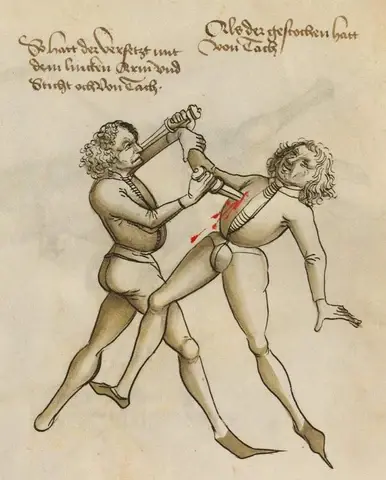
Image of a proper Renaissance-era difference of opinion furnished courtesy of arms-n-armor.com
This emphasis on learning swordplay methods from bygone days tends to create HEMA clubs and schools that are effectively nothing more than hobby groups for nerdy history buffs who love to role-play in their historical costumes. In defense of these autistic-spectrum history buffs who practice HEMA today, most of European combat treatises from the olden days place an undue emphasis on fighting with swords, so it should come as no surprise that many contemporary HEMA schools neglect the aspects of old European fighting arts that are actually the most useful in today’s world.
As noted in one video that is featured on the Fighting Matters YouTub.com channel, pretty much anyone who chooses to study European Renaissance Era and Medieval Era sword-fighting techniques is acting on a fantasy of some type. And yes, many of the people who start learning HEMA sword-fighting methods have never done any physical activity at all before starting their HEMA training programs; thus, HEMA’s image as being a collection of nerds holds some truth. Within the scope of HEMA studies, different people gravitate to studying different texts more than others, and a person’s choice of focus reveals something of their personality.
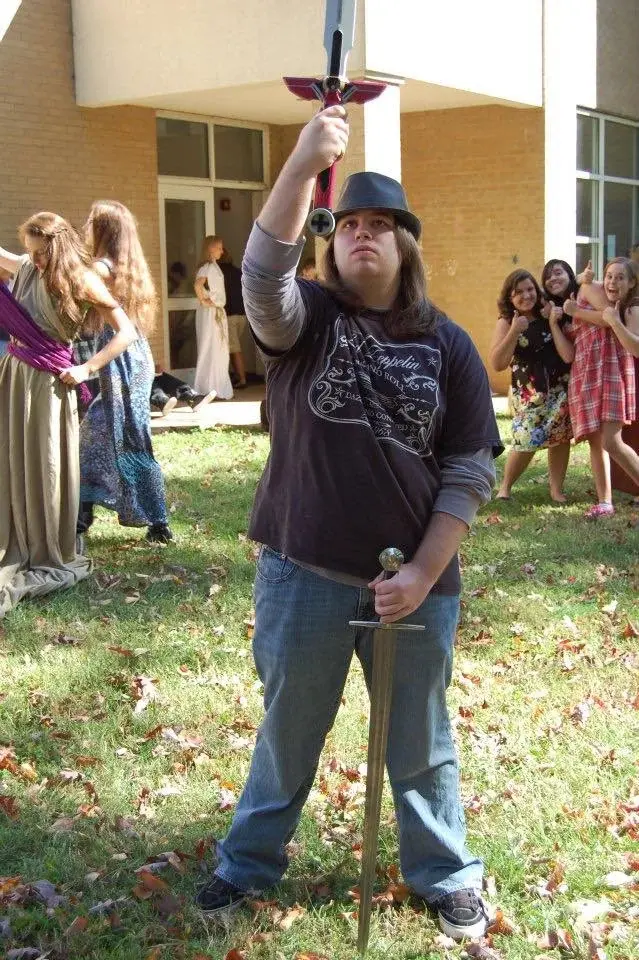
Image of “Fedora Warrior” furnished courtesy of acdcfanboy on the r/photoshopbattles forum from reddit.com
Today’s burgeoning HEMA scene owes its origins to the old Society of Creative anachronism which was founded in 1966. The original Society for Creative Anachronism, or “SCA” as it is commonly known, was founded in Berkeley, California. This organization was created to serve as a group for people who were enthusiastic about Medieval reenactments. The Society for Creative Anachronism catered to those who were interested in crafts such as blacksmithing, calligraphy, and cooking from the Medieval Era. The Society of Creative Anachronism also catered to those who were interested in reenacting Medieval Era and Renaissance Era fighting arts. This interest in European Medieval Era fighting arts among SCA members led to mock Medieval battles taking place at SCA conventions and gatherings, and the SCA’s mock-battle events in turn spurred more historical research into historical European fighting arts on the part of SCA members.
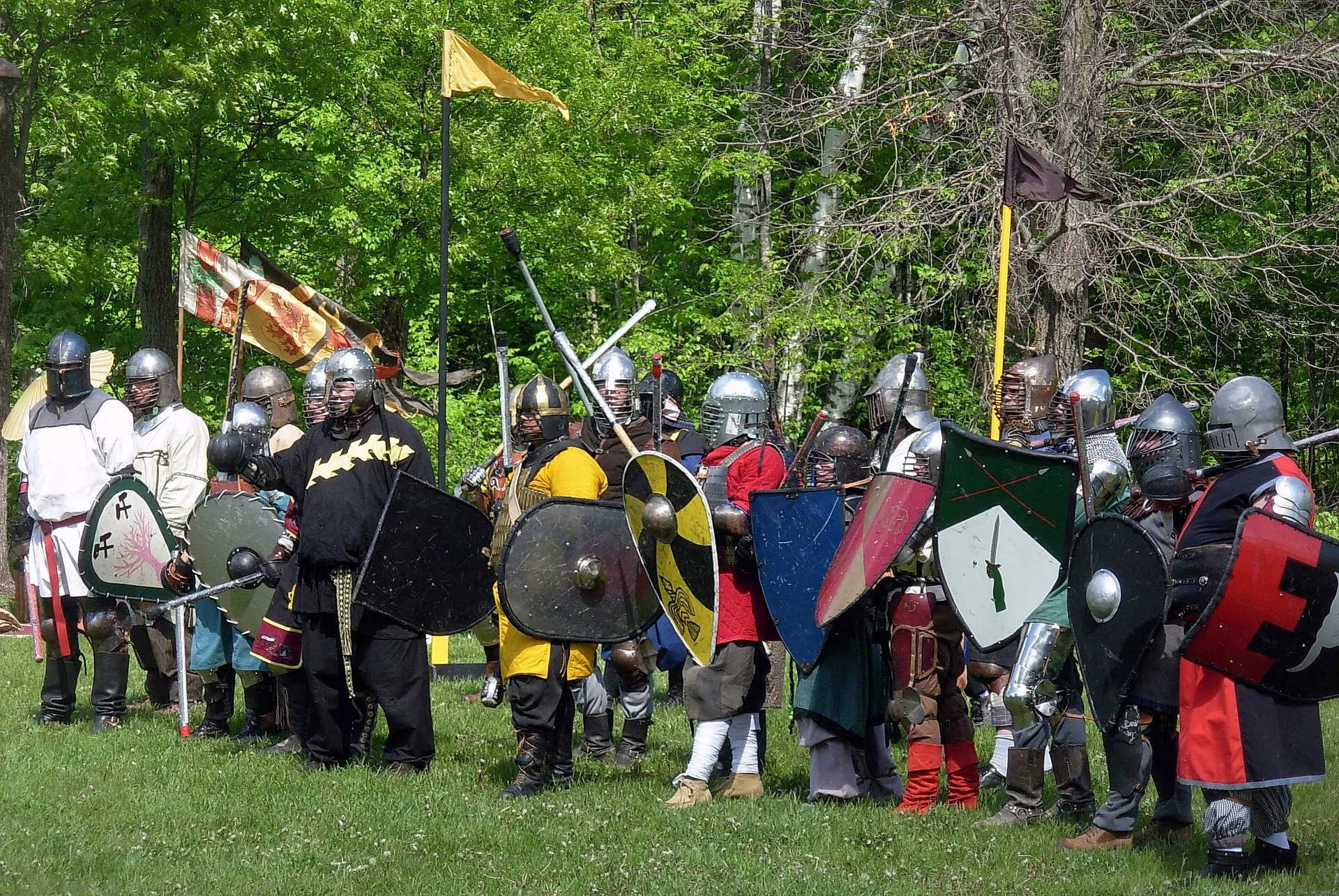
Image of an SCA mock medieval battle furnished courtesy of Wikipedia.org
The term “HEMA” was coined by the British historian named Mathew Easton back in the late 1990s because he disliked the term “WMA” or “Western Martial Arts.” Another significant figure in the development of modern HEMA is John Clements who took over the Historical Armed Combat Association, or “HACA,” back in 1993. It was Clements who set up schools that taught several new students and it was Clements who helped to establish new schools of classical European fighting arts. Clements also wrote a book titled Medieval Swordsmanship: Illustrated Methods And Techniques which was published by Paladin Press in 1993. (For those who are interested, the Historical European Martial Arts Resources website provides a more detailed history of HEMA’s development arc from the 1960s to the present.)
Today, the widespread availability of historical European fighting texts in the form of printed paper books and in the form of online reference material has created an open source for those who are looking to start their own HEMA schools and HEMA clubs. The internet has also allowed knowledge of HEMA to spread in ways that were not possible in times past. As of 2025, HEMA participation grew 85% between 2020 and 2025. Despite HEMA’s rapid international growth since the year 2000, Brazilian Jujitsu became the most popular martial art around the world in the year 2000, and Brazilian Jujitsu still remains the fastest growing martial art around the world in the 2020s.
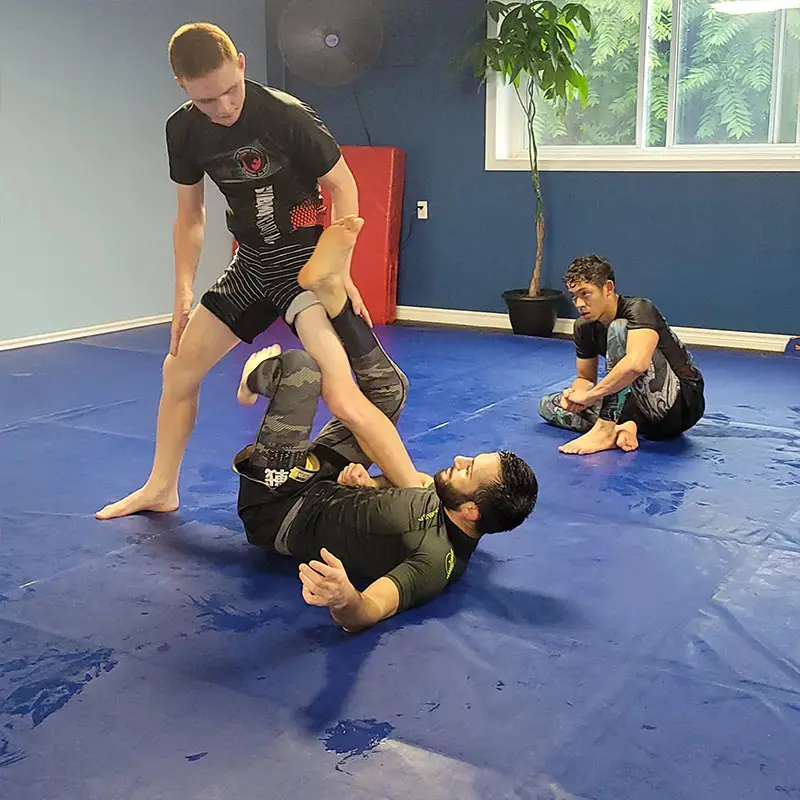
Image of a Brazilian Jui Jitsu training session furnished courtesy of subacademyldn.com
One could argue that the explosive growth of HEMA in the years since 2000 is a good thing, and one could argue that having many students that are arriving at HEMA clubs who already have years of experience studying other martial arts is also a good thing as well. That having been said, some HEMA students and teachers have noted that HEMA is also beginning to suffer from a bit of drift away from its historical source material at some schools. As some critics have also noted, as HEMA’s popularity grows with the arrival of more sword fighting tournaments and more Ringen wresting tournaments, the discipline of HEMA continues move more towards being yet another modern and commercialized sport as opposed to representing old European cultural institutions and representing a solid system of fighting and self-defense.
The Essence of Modern HEMA
The backbone of modern HEMA training rests upon a few notable authors who recorded their treatises on parchment during the 1400s and 1500s. Modern HEMA also rests on a somewhat short list of critical authors who wrote old texts; however, contemporary HEMA students and contemporary HEMA teachers should practice, study, and apply as many other pertinent HEMA-oriented source materials as they can in order to create more effective ways of fighting.
Here is a very short and abbreviated list that showcases a few well-known HEMA teachers (crusty old German dudes) from the European Renaissance Era. Historical texts of these same old masters are also noted.
Fiore dei Liberi:
According to basic information that is supplied from Wikipedia, this gentleman was born during 1530 in Civilidale de Fruili. Firoe die Liberi’s birthplace is part of northern Italy today. Dei Liberi is reported to have died in 1409. Wikipedia also mentions that Dei Liberi was a knight and low-ranking nobleman of German descent who lived during a time when some northern parts of Italy were part of the Holy Roman Empire. The native people of Northern Italy have considerable mixtures of German DNA to this day which date back to the Holy Roman Empire and to the original Roman Empire. The Holy Roman Empire is considered to be the First German Reich.
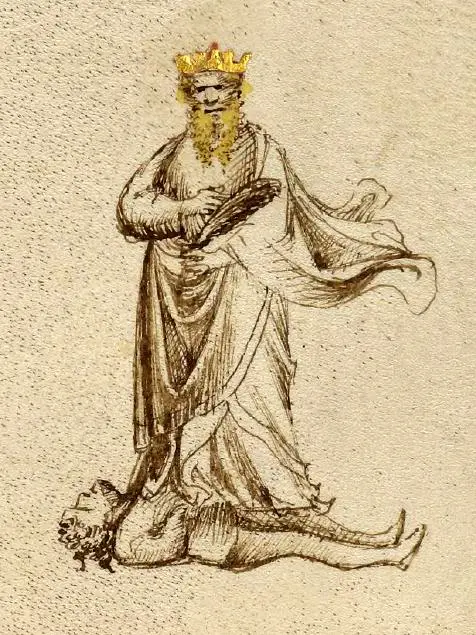
Possible and likely image of Fiore Furlano de’i Liberi furnished courtesy of Wikipedia.org
According to surviving historical records, Dei Liberi fought in five duels himself and he trained several young noblemen in the arts of dueling. A few of his students also fought in rather high-profile duels across northern Italy during Dei Liberi’s lifetime. For the intended purposes of modern HEMA students, the specifics of Dei Liberi’s life are an interesting but secondary note to his book that is titled “The Flower of Battle.” As of today, four authentic copies of this manuscript still survive, and they are known as: Fior di Battaglia (Ms. M.383), Fior di Battaglia (Ms. Ludwig XV 13), Flos Duellatorum (Pisani Dossi Ms.), and Florius de Arte Luctandi (Mss. Latin 11269).
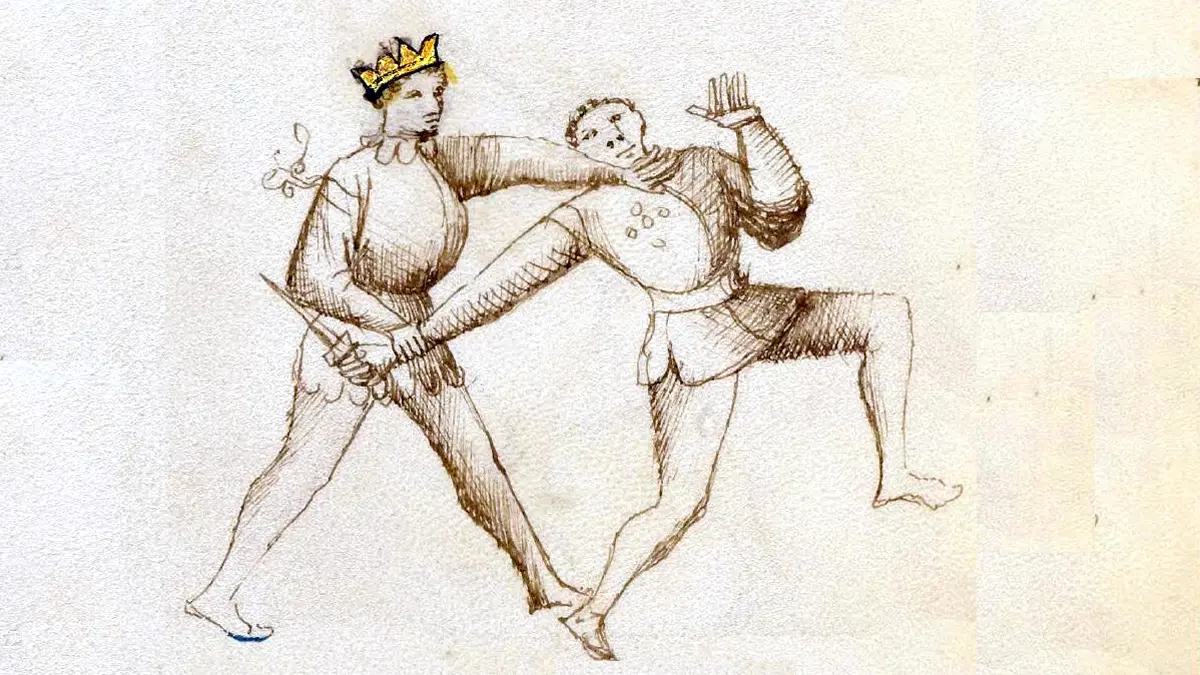
Image of Fiore Dei Liberi methods in action furnished courtesy of simonechierchini.com
Surviving historical manuscripts of Dei Liberi’s original treatise are owned by various libraries and museums; however, digitized and complete versions of these four manuscripts are available to the public. These manuscripts also include translations to modern English and other languages. Dei Liberi’s Flower of Battlecodex offers instruction concerning how to fight with swords, knives, poleaxes, and spears. The Flower of Battle also includes instruction concerning how to fight from horseback.
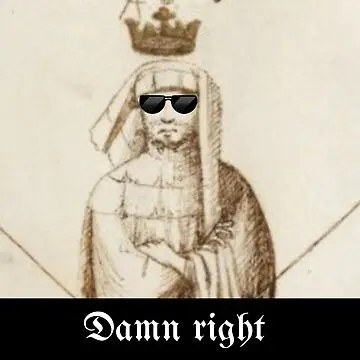
The image seen above shows a Fiore Dei Liberi poster that is for sale on redbubble.com on the Memes of History account.
Dei Liberi’s old treatise holds value in the modern world because it provides useful information about how to counter knife attacks when unarmed or how to make knife attacks against others when armed with a knife yourself. This same manuscript also contains useful information about how to fight unarmed without possessing any weapons.
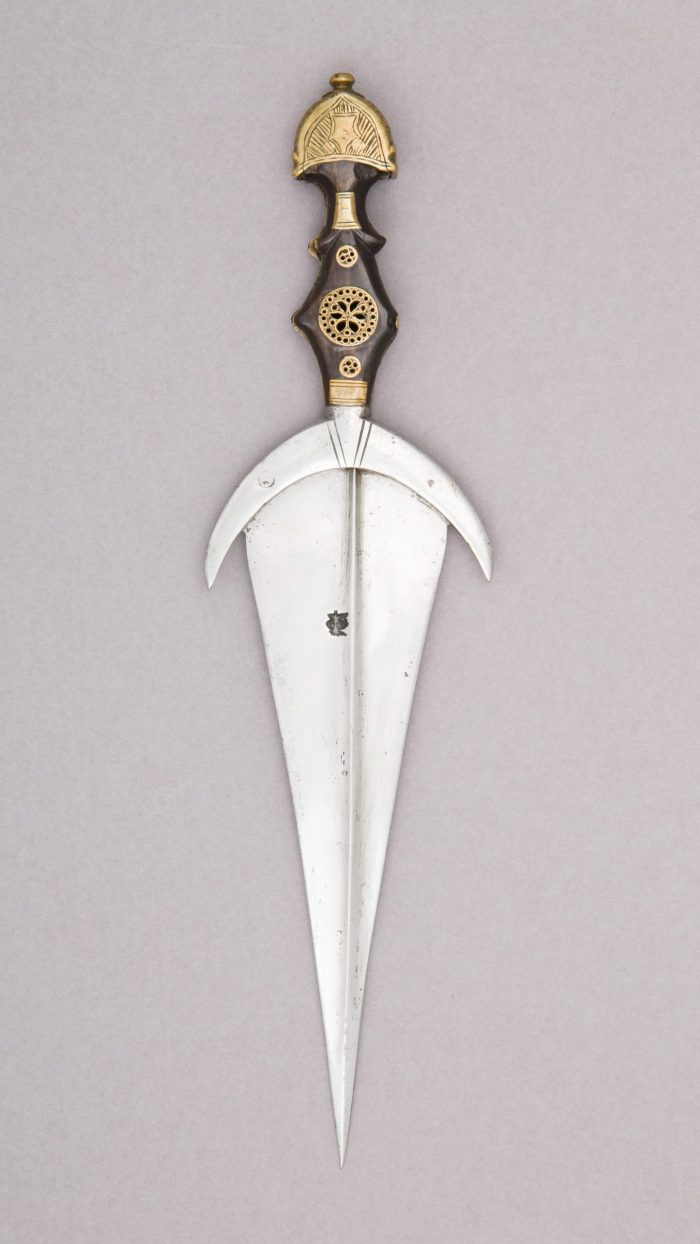
If one is to study knife-fighting methods from Renaissance Italy, then learning to fight with the Cinquedea knife is called for in today’s world. Image of a classic Cinquedea knife furnished courtesy of metmuseam.org
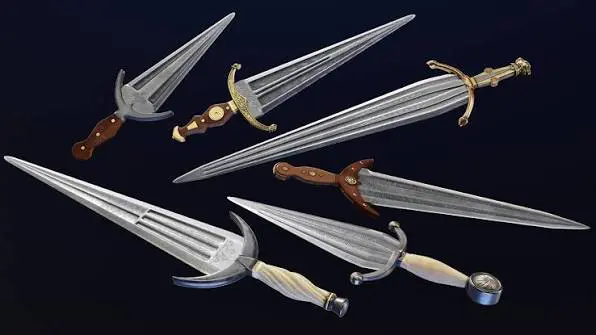
Image of different Cinquedea knives furnished courtesy of todomedeival.com
Contemporary European people are unlikely to fight in duels that involve using polearms and involve wearing suits of armor while wielding shields, but modern European people are very likely to face physical attacks from unarmed adversaries while moving about in public places. Sadly, contemporary European people are also very likely to face knife-wielding opponents with dark complexions when moving about in public spaces while they themselves are unarmed.
For some odd reason, men from Muslim lands tend to be usually rapey and unusually stabbby; thus, one might wish to become well versed in counter arguments against knife attacks when engaged in intellectual symposiums with these fine and learned gentlemen. When conversations become a bit too spirited in today’s urban settings assiduous study of Dei Liberi’s works holds considerable value.
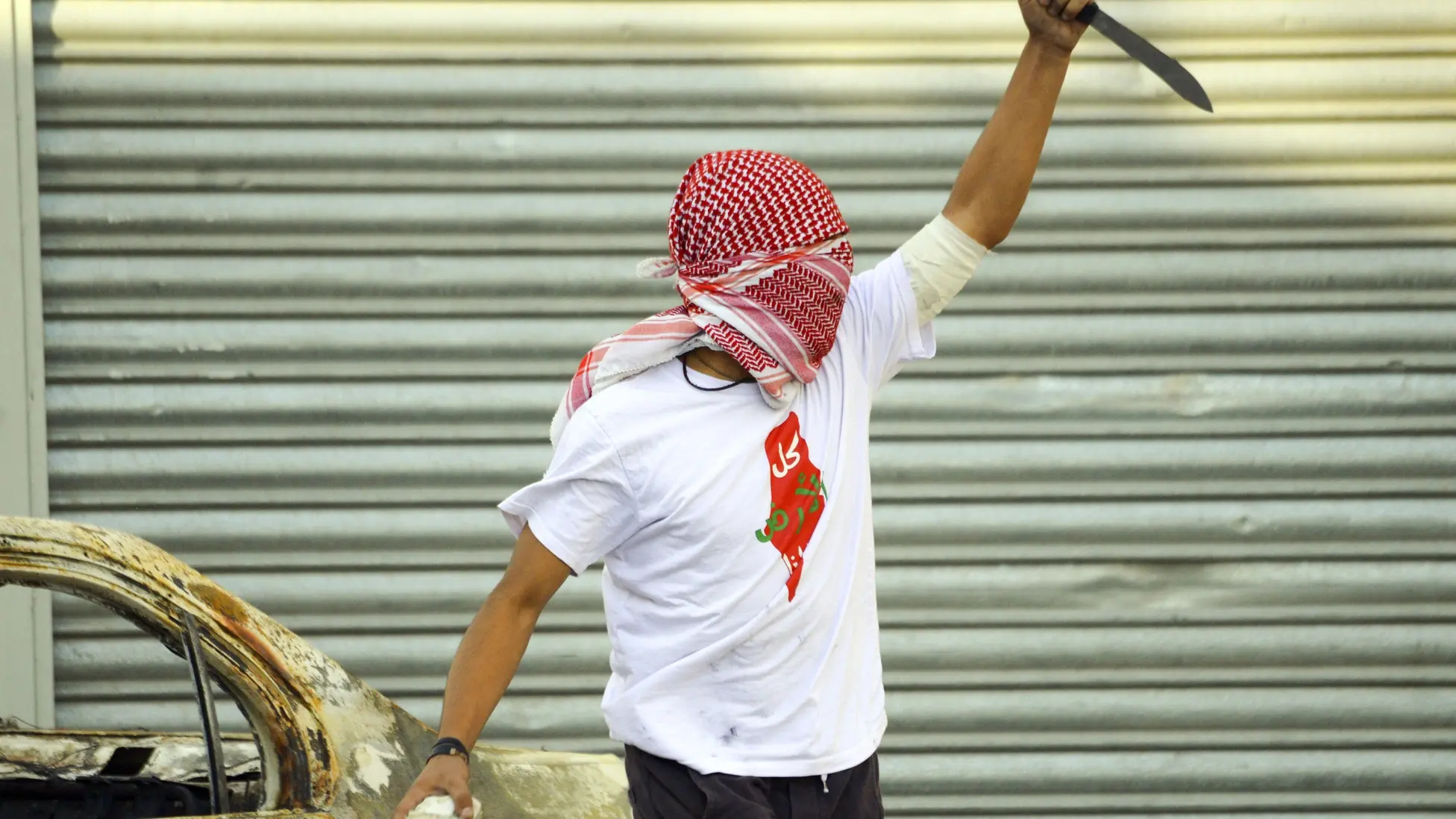
Image courtesy of theatlantic.com
In contemporary times, true stories exist that document students from various schools of historical sword-fighting who actually put their nerdy skills to use in real crisis situations. Not surprisingly, a few instances of swords being used during documented cases of home defense do exist in the 21st century. Swords have also been pulled from the back seats and trunks of cars to serve as visual deterrents which successfully cooled off potentially violent confrontations during incidents of road rage. Swords have also been brandished as deterrents during incidents where good citizens were attempting to mug other good citizens at gas stations and in parking lots.
One of the commentary videos on the Fighting Matters YouTube.com channel included a HEMA sword-fighting teacher who told a story about one of his students sensing trouble when a large man approached him while he was parked at a gas station. This encounter involved the nerdy HEMA student reaching into the backseat of his hatchback car and pulling out his two-handed longsword in response to his uneasy feelings. After grabbing his weapon, the HEMA student then stood holding his sword as the man continued to approach. The approaching man in question proceeded to assess the situation, then he decided to turn around and walk the other direction. The complexion of this approaching large man there in Charlotte, North Caroline was not mentioned, but one can hazard uneducated guesses about this matter.
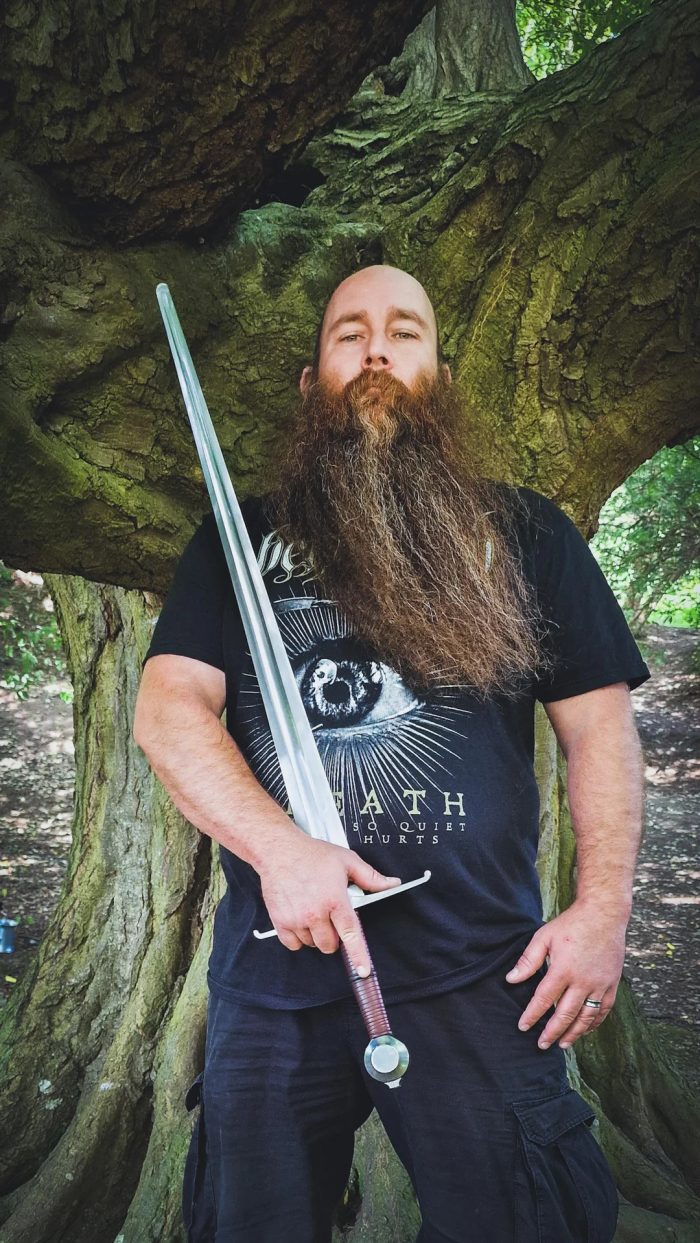
If you did not have a gun, then would you care to try your luck at mugging this man? Image courtesy of Northern_Woods620 on the r/SWORDS forum from reddit.com
Old instruction manuals that outline the best ways to fight with swords can find value in today’s world due to the increasing likelihood of facing culturally enriching encounters from denizens of the “Global South” who are carrying cheap and common machetes. As things deteriorate in urban zones across Europe and elsewhere during the coming years, the value of carrying concealable short swords will only increase.
A basic search engine inquiry notes that the old Roman Gladius short swords fulfill the function of personal urban defense quite well. AI-powered search inquiries continually note that short swords are the best promoters of understanding during modern urban disagreements because they are concealable and they can be used effectively in crowded settings like parking lots and dark alleyways. However, these same inquiries note that longer swords are the best option when having civil discussions in more open spaces.
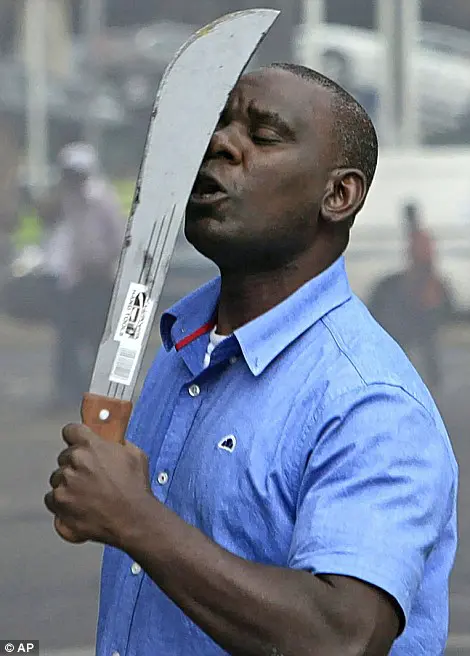
Image furnished courtesy of an unknown account from the r/Funny forum on reddit.com
Johannes Liechtenauer:
Lichtenauer never wrote anything down himself, but his students did record his teachings in their writings, so some remains of Liechtenauer’s teachings survive into modern times. Lichtenauer lived in what is today called “Eastern Germany” during the 1400s, and he is considered to be the earliest of Germany’s Renaissance Era masters of the combat arts. The preserved texts from his students include: Codex Döbringer (c. 1389), MS 3227a (c. 15th century), Sigmund Ringeck’s Commentaries (c. 1500), Pseudo-Peter von Danzig (c. 1452).
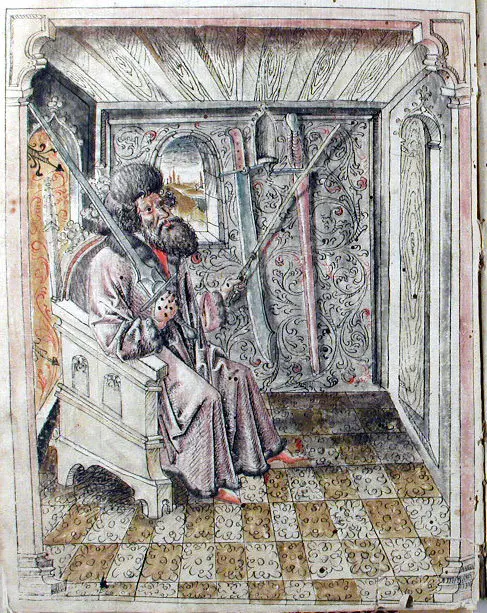
Image of the only known historical illustration of Johannes Licehtenauer furnished courtesy of Wikipedia.org
Surviving copies of combat treatises that were compiled by Liechtenauer’s students survive to this day and they remain in the care of various libraries and museums. Thankfully, digitalized copies of these scripts can be purchased today in the form of paper books and they can also be viewed online. Like Mr. Dei Liberi, many of Liechtenauer’s works discuss activities that are of little practical value in today’s world, yet some of his teachings such as those that pertain to knife-fighting and those which pertain to combat grappling do have a lot of present social relevance.
German combat-grappling methods from the Late Medieval period and the Renaissance Era that Leichtenauer’s students wrote about and meticulously documented are commonly referred to as “Kamfenringen.” The term “Kamfenringen” translates from old German as “Combat Wrestling” into modern English vernacular. In contemporary HEMA circles, the old term “Kamfringen” has been shorted to just “Ringen,” particularly within English-speaking locales.
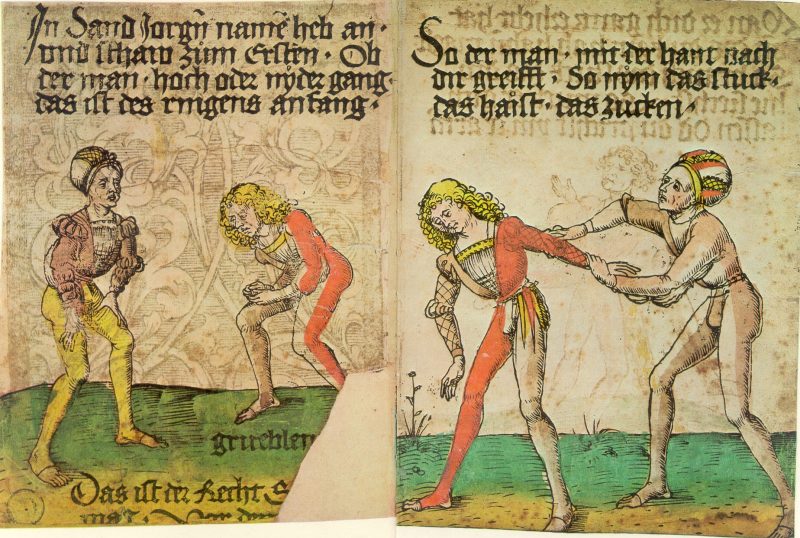
Image of courtesy of wiktenauer.com
Hans Talhoffer:
According most historical records, Mr. Hans Talhoffer was born in the German region of Swabia around 1410 and he died around 1482. Talhoffer authored five manscapes that discussed fencing and he earned his living training noblemen for combat in duels. Some of Talhoffer’s key historical treatises include: Combat Manual of 1467 (Cod.icon. 394a), The 1459 Personal Treatise (MS Thott 290.2º), The Königsegg Treatise (MS XIX.17-3): The 1448 Archetype (MS Chart.A.558).
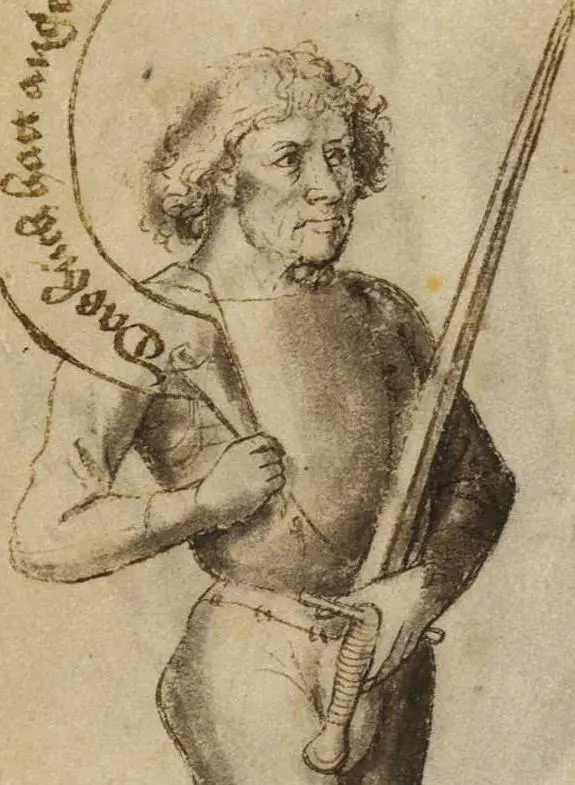
Image of Hans Talhoffer furnished courtesy of Wikipedia.org
Like other key HEMA figures, Talhoffer’s most important texts are available today in the format of printed paper books. Talhoffer’s texts are also viewable online. Contemporary reference materials that pertain to Talhoffer typically include his original illustrations along with translations to English and other languages. Like other names mentioned here, much of Talhoffer’s work has little to no relevance in today’s world; however, Talhoffer’s written discussions and illustrations that pertain to unarmed combat techniques and classic knife-fighting methods are quite relevant for modern students of HEMA.
Fabian van Auerswald
Von Auerswald is one of the less significant figures within the study of German Kamfringen, yet he is worth mentioning at some point. He is known for authoring a 1539 text that outlines Ringen techniques which is titled: Ringer kunst: funf und Achtzig Stücke. This text translates to English as “The Art of Wrestling: Eighty-Five Pieces.” Like the other German Renaissance Era fighting masters, van Auerswald’s works are available to the public as paper-printed materials and they are additionally available online. These same reference materials are accessible in their original German form with translations to other languages.

Image of Fabian von Aueswald furnished courtesy of Wikipedia.org
Codex Wallerstein
The “Codex Wallerstein” consists of three 15th century manuscripts that originated from the city of Augsburg, Germany. The true authors who drafted and illustrated this set of writings are unknown, but the original text carried an inscription date to 1549 which reads, “Vom baumanns 108.” This same text is reported to have belonged to Michael Baumann who was listed as a mercenary by profession. Tax records from the city of Augsburg, Germany list Baumann as having resided in this city between 1471 and 1495. These three texts that form the “Codex Wallerstein” total 221 pages. Baumann’s text later fell into the possession of other patrons until finding a place at the Oettingen-Wallerstein library in 1653.
The Codex Wallerstein encompasses written texts and illustrations that outline optimal fighting methods when using various types of bladed weapons; however, the third section teaches readers about the most effective grappling (Kamfringen) strategies.
Complete and illustrated copies of the vaunted “Codex Wallerstein” can be purchased in the form of paper books, but copies of this text are also available online. Modern copies of the Codex Wallerstein include the original German text along with additional English translations of the original German wording.
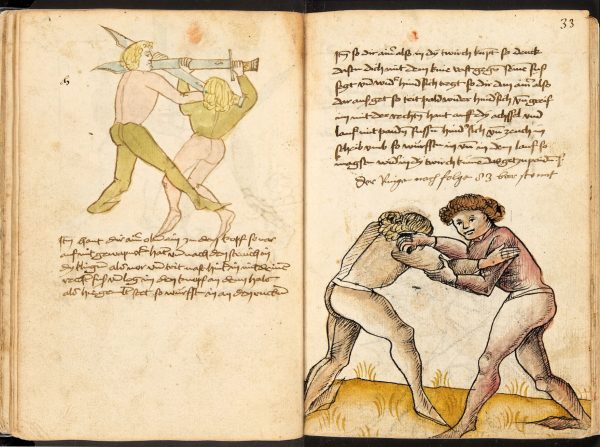
Image of Codex Wallerstein grappling methods furnished courtesy of indigogo.com
Jeronimo Sanchez de Carranza
De Carranza was a Spanish nobleman who was born in 1539 and died in the year 1600. This old Spanish nobleman is worth noting because he wrote a treatise about fencing that is titled De la Filosofía de las Armas. The name of De Carranza’s famous book translates to “The Philosophy of Arms” in English. De Carranza’s school of fencing is also called La Verdadera Destreza which translates to “The True Art and Skill” in English. De Carranza’s ideas are commonly known as Destreza in contemporary times.
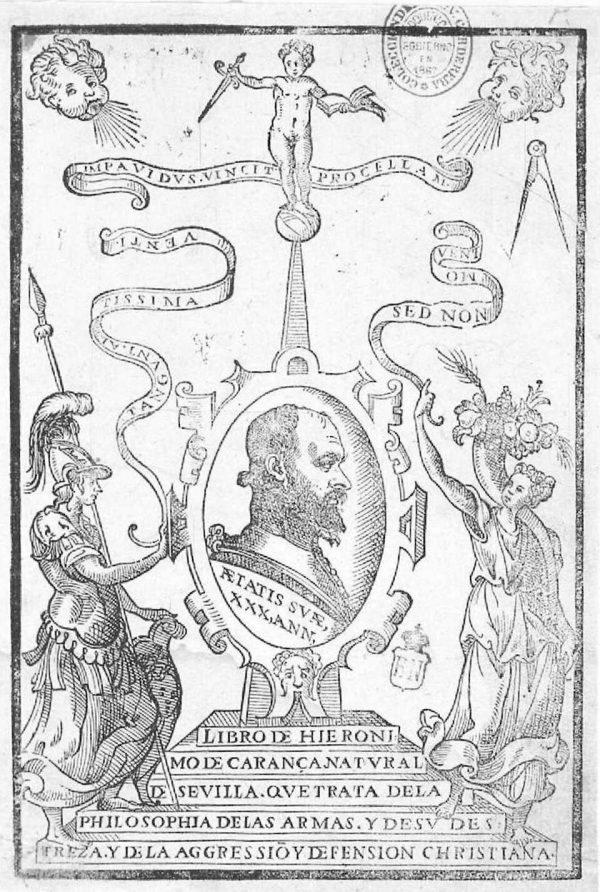
Image of Jeronimo Sanchez de Carranza furnished courtesy of Wikipedia.org
De Carranza’s most well-known body of writing is worth studying because it contains masterful ideas about how to move about on foot during a swordfight. De Carranza’s philosophy of movement during a sword fight is very applicable to unarmed confrontations as well as altercations that involve knives, sticks, and clubs. As noted earlier, friendly meetings with dark-skinned “cultural-enrichers” in public places are troublingly likely to include games with machetes, so learning a bit of old Iberian swordplay just might hold a bit of contemporary social relevance.
De Carranza’s philosophy breaks down any cordial meeting between close friends into a mathematical system of distance-management and calculated movements which are meant to take place in areas that offer a bit of physical distance. De Carranza’s philosophy reduced all fighting movements into a set of interlocking and concentric circles, arcs, and parabolas.
De Carranza’s system of foot movement emphasizes never attacking an opponent in a straight line and never retreating in a straight line either. Instead of moving in straight lines, De Carranza’s school of thought emphasizes attacking quickly in a circular and diagonal manner, then quickly moving away from an opponent in the same circular and diagonal manner. Besides offering a mathematical system for sword fighting, De Carranza’s ideas translate well into a system for delivering palm strikes and hammer-fist strikes along with methods for managing distance while moving to set up kicks to an opponent’s shins, feet, and ankles.
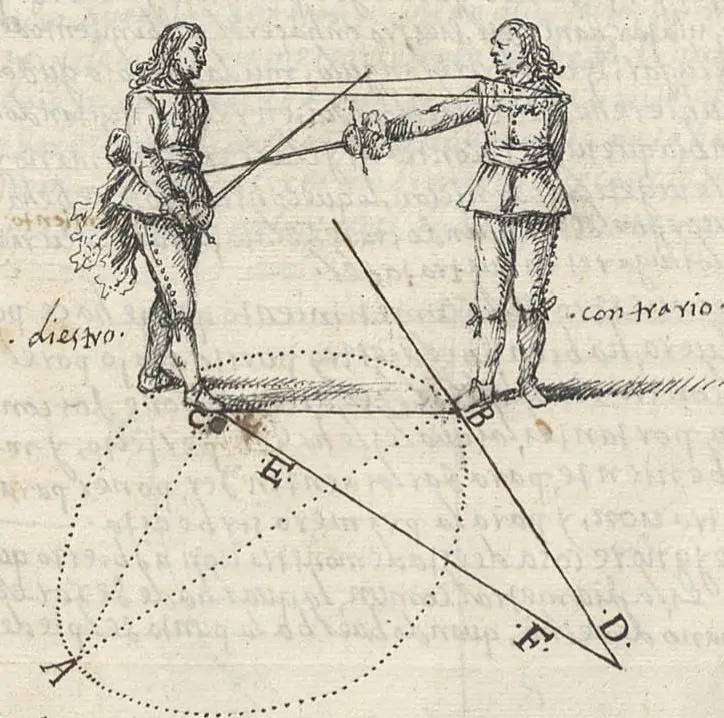
Image courtesy of esgrimagranada.es
De Carranza’s ideas about how to manage attacks and retreats during sword fights have made appearances in popular film such as a 1993 film starring the esteemed Spanish thespian named Antonio Banderas along with the well-known English actor named Anthony Hopkins. This Hollywood film that showcases Destreza methods is titled The Mask of Zorro. Other popular films have given the writings of de Carranza a quasi-mystical status which is perhaps giving this author a bit too much credence; none the less, his works are still worth studying for modern HEMA practitioners.
Classic English Pugilism
English Pugilism arose during earlier phases of the Modern Era and this discipline evolved from a system of self-defense into the modern sport of boxing. Classic English Pugilism has a few source books of note that offer useful information for today’s world. The study of Classic English Pugilism’s practices, philosophies, and techniques offers contemporary students of HEMA a good reference point for how to navigate confrontations where grappling is ill-advised (more on this topic later).
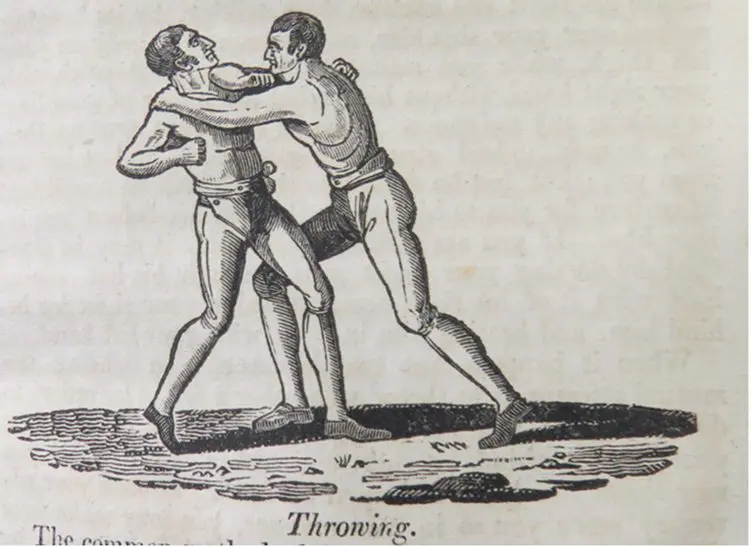
Image courtesy of guildhalllibrarynewsletter.wordpress.com
- Mark Elliott’s Book titled The Art of Attack and Defense:
Elliott’s book outlines ways to strike and parry during unarmed combat. This text also places an emphasis on using circular strikes that hit with the palms of one’s hands or striking with the part of each fist that sits below the pinky finger.
- Bart J. Doran’s book titled: “Pugilism 1743 – 1889: A Compendium of Traditional English Bare-Knuckle Boxing and Its Application to Bayonet Fighting”
Mr. Doran’s book contains study material from 32 different historical texts and provides a solid and useful reference library for old English Pugilist methods and training practices.
Part 2. Is HEMA an Effective and Legitimate System of Martial Arts?
Many people would say that HEMA has no true lines of lineage, so it really is just a joke, or they might say that HEMA is a “pretend” excuse for a martial arts fighting system. So, is this true?
The fact is, what is now referred to as “HEMA” is simply a cobbled together and ad-hock collection of old and half-forgotten archival manuscripts that motley collections of mildly autistic misfits and history enthusiasts have studied over the years. The term “HEMA” simply arose because some name had to be applied to the resurrected practical study of old European sword-fighting traditions and old European grappling traditions.
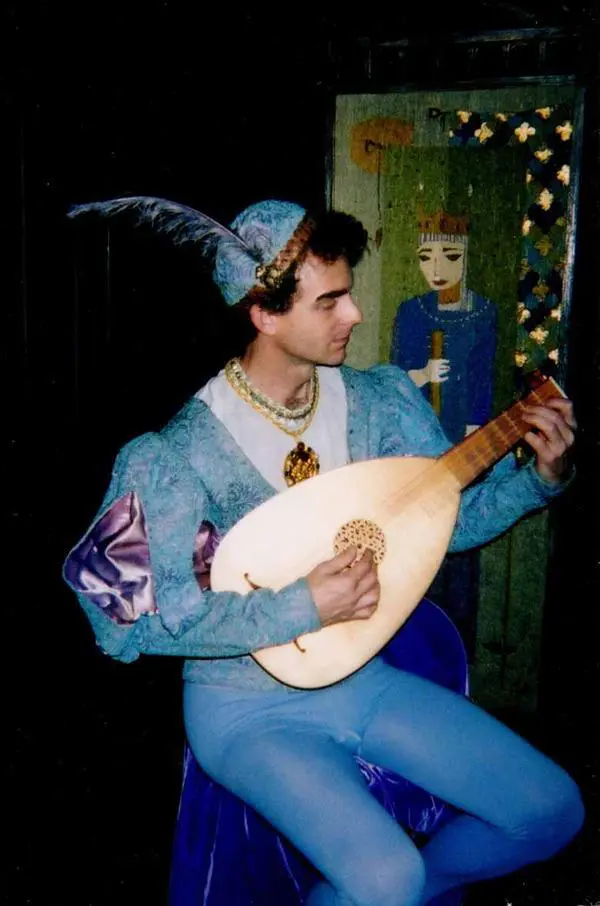
What befalls those who study HEMA! Image courtesy of theentertainmentcontractor.com
So, is this new, yet old, fighting system that goes by the moniker “HEMA” a legitimate member of the international martial arts community?
After viewing online videos that showcase some of the most capable contemporary practitioners of HEMA in Germany, Slovenia, and North America who demonstrate their methods on video, any sensible person would have to say: “YES! HEMA is legitimate!”
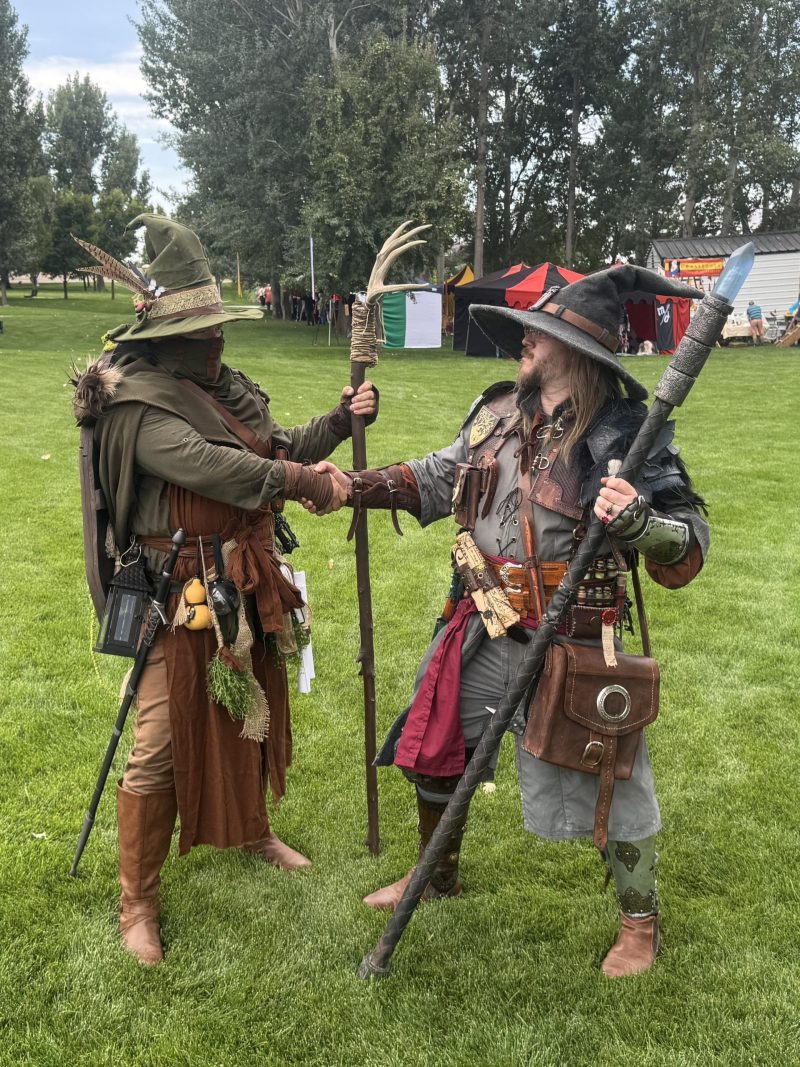
Revenge of the nerds! “Hooray! HEMA is officially a legitimate member of the world’s martial arts community!” Image furnished courtesy of PunkinLighter on the r/renfaire forum from reddit.com
One such video that showcases HEMA in practical action is titled “I Tried HEMA to see if it’s legit.” This video is featured on the YouTube channel titled, Josh Beam BJJ. This video is an “eye-opener” for those who are not familiar with HEMA because this video’s host has a Black Belt in Brazilian Jujitsu and he chooses to spar with a HEMA teacher at a well-known HEMA school in Santa Clara, California. The sparring match between the HEMA-head and the Brazilian Jujitsu Black Belt does not end with the Jujitsu Black Belt dominating the HEMA practitioner. Simply watching videos about HEMA, such as this one, are also likely to leave the viewer feeling rather impressed with present HEMA methods.
The YouTube channel named Scholagladiatoria also released a 2022 video titled “Why THE BEST MARTIAL ART is HEMA.” In this video, the host notes that HEMA has a very open training system which practices “Pressure Testing” against other types of martial arts, and at least thus far, HEMA is standing up well in swordplay against all other types of classical sword fighting systems. However, as noted in the video that was posted on the Josh Beam BJJ YouTube channel, HEMA practitioners also “Pressure Test” their unarmed combat methods against all other types of unarmed fighting systems.
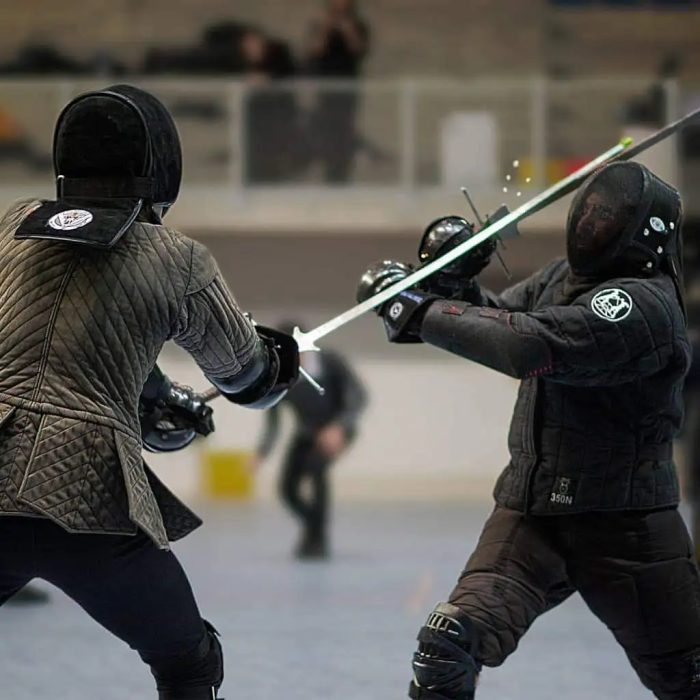
Image of a contemporary HEMA sporting competition that is dedicated to sword fighting methods furnished courtesy of indyfencing.net
A Quora.com search about how HEMA methods compare to Brazilian Jujitsu methods found that the only real shortcoming which HEMA practitioners had when competing against Brazilian Jujitsu practitioners in contests of martial prowess was a tendency for HEMA practitioners to “telegraph” their attacking techniques a bit too much due to Brazilian Jujitsu practitioners being very familiar with methods for countering incoming grappling attacks.
In this context, the term “telegraph” denotes attempting attacks that are ineffective because they give opponents too time and too much distance to formulate solid counter measures against their opponent’s incoming grappling attacks. Ideally, grappling attacks arrive with enough speed to preempt an opponent’s effective countermeasures; however, with a bit of practice and modification HEMA methods can be adapted to effectively subdue any type of trained opponent. Many HEMA moves are also designed to work on opponents who have shirts and jackets to grab, but these shortcomings are easily remedied.
HEMA has “Frog DNA”
Some HEMA enthusiasts compare studying HEMA to the practice of sampling DNA to resurrect extinct animal species, like what was done in the 1993 Jewish Hollywood movie called Jurassic Park. In the Jurassic Park film, researchers obtained dinosaur DNA samples by examining the guts of mosquitos that were found trapped inside chunks of fossilized tree sap which dated back to the time of the dinosaurs. Whenever these researchers found missing gaps in the dinosaur DNA samples, they then proceeded to simply fill in these gaps with cuts from frog DNA sequences.

Image courtesy of iamfy.co
Frog DNA was chosen to fill missing gaps in dinosaur DNA sequences because frogs and amphibians preceded the arrival dinosaurs; therefore, frog DNA was imagined to work as well as anything else for filling gaps within dinosaur DNA sequences. Some practitioners have noted that modern HEMA schools and contemporary academic researchers of HEMA must simply develop their own ideas in order to bridge any missing and incomplete areas of information that pertain to transforming moldy old historical texts into an effective modern fighting art.

Image courtesy of dreamstime.com
Conclusion?
Despite what the haters might say, after watching contemporary HEMA practitioners in action during online videos, one cannot help but conclude that HEMA is an effective fighting art. HEMA is a real and legitimate martial art, even if it incorporates scholarly “Frog DNA,” and even if it has checkered origins that reek of Dungeons & Dragons, Shakespeare Festivals, Renaissance Fairs, and Aspergers Syndrome.
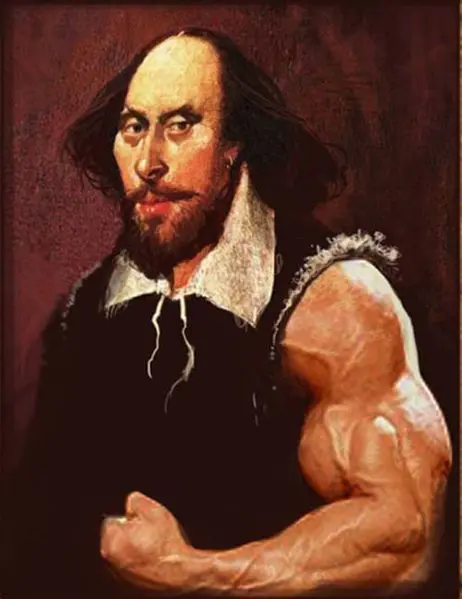
Image courtesy of transmedialshakespeare.wordpress.com
Part 3. Learning HEMA Is Important for Cultural Reasons
In the early 21st century, Aryans the world over are facing a systematic and Jewish-instigated, cultural and biological campaign of genocide; thus, there has been a great resurgence of interest in authentically Historical European Culture. This renewed interest in European cultural practices includes a renewed interest in distinctly European Martial Arts. In light of a pressing need to revitalize European culture that is looming over today’s world, studying HEMA is a valuable avenue for reviving a truly Aryan Culture.
HEMA as a theoretically non-political component in the process of building Aryan Renaissance against disappearance and dispossession. In light of the troubles that now plague European people the world over, there is a growing interest in Martial Arts in general, but this interest in studying useful martial arts is coupled with a conscious desire to reclaim something that is distinctly European. Studying martial arts is primarily done for one of three reasons: Self-Defense, Sporting, and Historical Reenacting. However, as The Old Jewish Ruling Order continues its ever-accelerating societal collapse among European countries, there is a growing practical need for relearning and mastering many of these formerly lost arts.
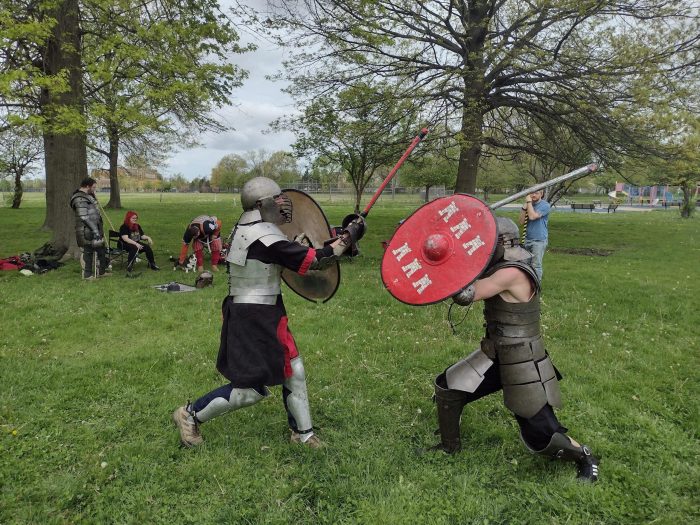
Image courtesy of clevelandminion on the r/Cleveland forum from reddit.com
There is something else though… the study of HEMA addresses a deep subconscious Spiritual Need in many European people, primarily in men. This need for reconnecting with ancestral traditions is similar to what you see in the Eastern Martial Arts; except, HEMA more readily relates to those of European descent. Many men of European Extraction recognize that something is missing in their lives which must be reclaimed if they are to live in ways which are true to their Natural Selves, yet this thirst to find meaning and connections cannot be quenched by imitating others. Our collective course of action in this matter must stem from, and mesh with, our Natural Aryan Selves.
In a manner that is somewhat similar to how Oriental Martial Arts are used, HEMA can be utilized to help a person become a more Holistic Individual. The study of martial arts helps one’s Body, one’s Mind, and one’s Spirit to work together as one complete force. The Ancient Greeks recognized that it was useless to train either the Body or the Mind in isolation if their society was seeking to produce a healthy, complete, and balanced person. You have to train BOTH the Body AND the Mind!

Image courtesy of Aggravating-Cream-61 on the r/pepethefrog forum on reddit.com
As things are understood in the Orient, learning the Mental and Spiritual Components of Martial Arts can help a person to become more prepared for assuming Leadership Positions in Modern Warfare and in other areas of contemporary life. Studying martial arts helps people sharpen the skills that are needed to successfully navigate life’s challenges. Some of these challenges include succeeding in modern warfare, thriving in modern business dealings, and deftly executing modern institutional functions of all types.
In many present-day East Asian military academies, there is a strong emphasis that is placed on future officers becoming proficient in martial arts. If one understands the “Mental/Spiritual” aspects of studying martial arts, then one can put these aspects to very effective use across many areas of life. This has been proven in actual warfare.
It is essential in combat to always be at peace within yourself. Your Spirit must always remain at rest while you do what you know how to do.
Fighting Without Anger is also needed, even when a person is locked into a life-or-death struggle. Fighting without anger merely means that a combatant must keep emotions out of their responses during crisis situations. Emotions cause people to make stupid and even fatal mistakes that a calm mind would otherwise easily avoid.

Image of David Carradine in the television show Kung Fu furnished courtesy of Classic Television Shows on Facebook.com
Walking With Humility is also important. This concept requires a little bit of explaining from the common vernacular. “Don’t walk around with a chip on your shoulder, or someone is going to knock it off for you.” As good as you think you are, somebody is always going to be better, particularly when you are being driven by arrogant emotionalism. When in combat, your emotions are never going to be your friend.
LIKE IT OR NOT, A COMPLETE RESURRECTION OF OLD EUROPEAN FIGHTING SYSTEMS IS NOT TRULY FEASIBLE! None the less, it is still absolutely imperative that we prepare for the eventual resurrection of such organizations as the Sturmabteilung (SA, or “Storm Troopers”), and the revival of their Italian Fascist Equivalent, the “Black Shirts.”
As social conditions continue to degenerate across Europe and other places of European diaspora, HEMA studies must be made into an integral component of training for these paramilitary organizations or “Political Troops” as they might be called. The old concept of “The Soldier as Athlete,” which is so fundamental to modern Special Forces training and doctrine must include the study of HEMA during the coming years, just as similar training was once a core practice for the Ancient Greeks.
A note about HEMA Uniforms:
A few websites now offer “off-the-shelf” or pre-made HEMA training unforms that are sold in standardized sizes in a “prêt-à-porter” manner. A few companies also offer custom designs and custom sewing services for those who are seeking specialized HEMA practice uniforms.
HEMA practice uniforms are basically modern facsimiles of the Renaissance Era clothing that is seen in old illustrations from sword-fighting treatises along with old German Ringen wrestling codexes. Some critics might say that wearing these seemingly outlandish and garish Renaissance Era uniforms that come replete with pleats is a bit foolish. These same old Renaissance Era uniforms often assault the eyes with a menagerie of bright colors and super poofy pants. However, wearing these poofy and colorful uniforms that look somewhat like a cross between carnival side show attire and Renaissance fair costumes does offers a bit of fun and novelty, plus it helps to provide European people with a connection to their cultural and historical roots. You have to love those recreated Renaissance Era workout uniforms!
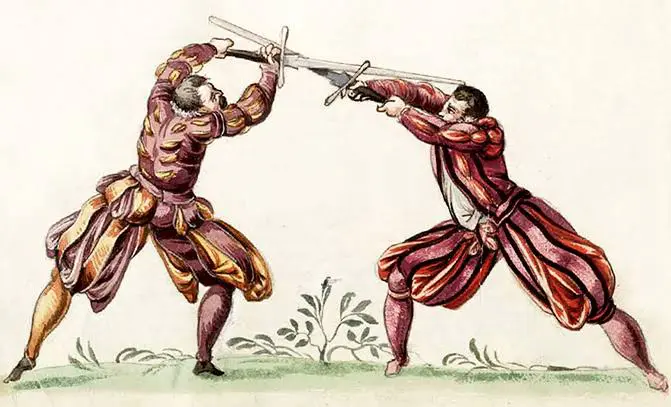
Image courtesy of fencing.com
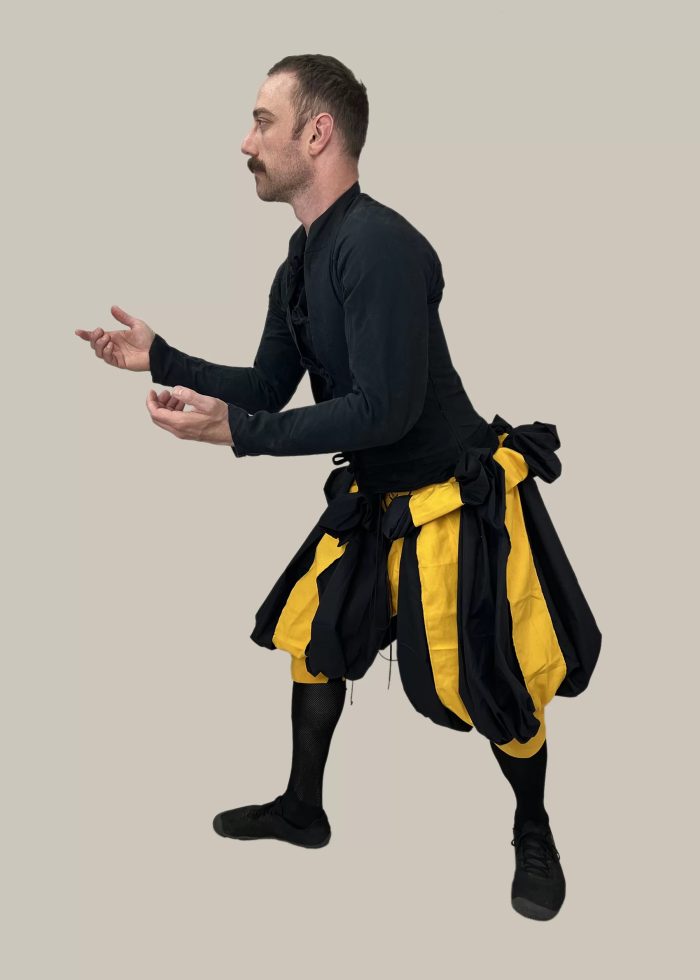
Image courtesy of historicaclotheirs.com
Part 4. Punch Drunk
As was noted earlier, a lot of the old historical reference materials that combine to create modern HEMA manuals do not place much emphasis on unarmed combat; however, even less emphasis is placed on punching within these old combat treatises. Many people who are new to the study of Renaissance Era HEMA are puzzled by the conspicuous absence of any illustrated or written content that outlines good punching and striking methods which are executed while one is standing.

Image courtesy of vecteasy.com
In today’s world, most people tend to think that punching with the knuckles of one’s closed fists is the most natural and optimal way to fight in unarmed combat, but this assumption is actually false. A great October 5, 2025 article that is still available for reading online was published on the Hema Misfits website. This great article was written by the fabulous Frenchman named Maxime Chouinard. When it comes to explaining the lack of punching in Renaissance Era fighting manuals, Mr. Chouinard wrote no canard. Mr. Chouinard’s awesome body of writing is titled: “A paucity of punches: why was punching so rare in pre-modern martial arts”
In his article, Mr. Chouinard, discusses how punches were rarely used during physical altercations during times of antiquity, including the Roman era and during the centuries of Ancient Greece. Punching was also notably absent during Europe’s Medieval Era and Renaissance Era. Modern punching techniques seem to have only entered the public consciousness in Europe during the 18th century by way of English Pugilism. Mr. Chouinard also notes that depictions of Pankration fighters from ancient Greece actually seem to depict hammer-fist strikes and not knuckle punches.
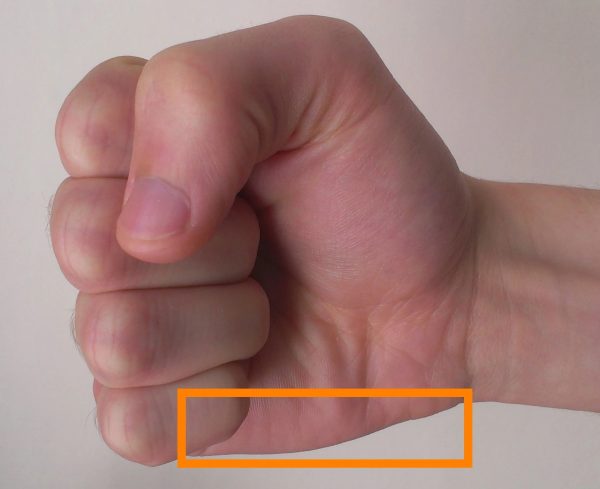
Image of a hammer fist striking area furnished courtesy of evoltionaryselfprotection.fandom.com
According to this same source, depictions of ancient boxers in Samaria, Greece, and Egypt also show sporting combatants trading strikes with their hands wrapped and padded in order to prevent injury to their metacarpal bones. That having been said, Chouinard notes that early English Pugilism tended to revolve around palm strikes and “hammer fist” strikes which involved attacking with the meaty part of the fist that sits under the pinky finger while also attacking opponents with open-handed slaps to the face and ears.
As Mr. Chouinard states, flat-handed slaps to the ear were traditionally called “Boxes” or “Boxes to the Ear” in the English language. “Boxes” were traditionally dispensed as disciplinary measures to children, dogs, farm animals, disagreeable wives, uppity house servants, employees who did not know their rightful place, and of course the fine gift of boxes were liberally awarded to the ears of street beggars.
The concept of bequeathing straight punches that hit with the knuckles to errant souls only arrived in the late 19th century at around the same time that padded gloves were introduced. These padded gloves that are still associated with boxers to this day were originally linked to sporting events. Mr. Chouinard mentions that historical illustrations and historical records that describe Asian martial arts also mostly offer written words and illustrations that outline palm strikes, hammer-fist attacks, and low kicks.
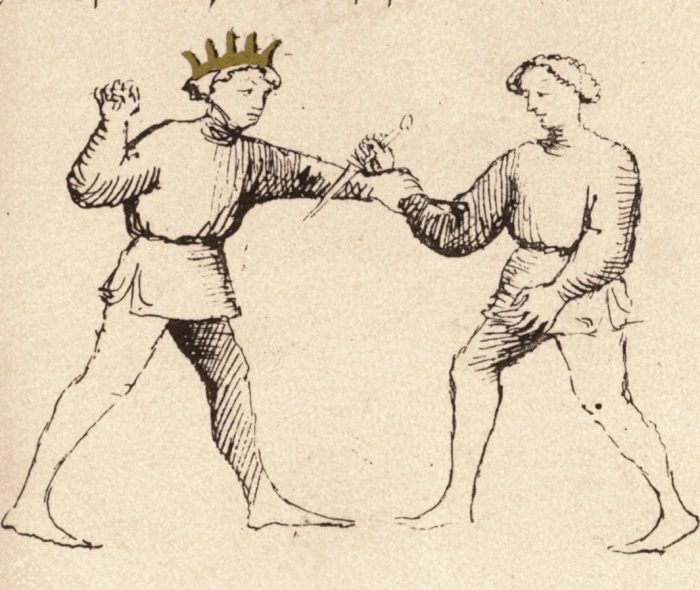
“Feel muh HEMA Pimp Hand!” Image furnished courtesy of arms-n-armor.com
Mr. Chouinard noted in his article that the metacarpal bones which form the foundation of palms in the human hands are troublingly delicate and disastrously prone to breaking when one punches with the ends of the metacarpal bones. The ends of one’s metacarpal bones are what is commonly called the “knuckles.” Boxers are still troublingly prone to fracturing their metacarpal bones, even when gloves are worn during fights, and even when gloves are worn during routine training sessions.
Chouinard’s same article notes that 1 in 10 contemporary bare-knuckle prize fights end with at least one broken metacarpal. Even if contemporary bare-knuckled prize fighters are not wearing padded gloves, they are still fighting with stiffened and taped wrists. These taped wrappings that decorate the wrists of modern bare-knuckle prize fighters are applied to ensure that no bones are broken when punches inevitably land at skewed angles. It turns out that even if a person works to toughen their knuckles for punching hard surfaces, they still run a great risk of breaking their metacarpal bones if their strikes land at any cockeyed angles. In conclusion, HEMA schools will make an effort to train with classic palm strikes, flat-handed boxes, and classic hammer-fist attacks in order to avoid incurring injuries during training sessions or during cordial gatherings.

Image of the old Fisto character in the He-Man cartoon series is furnished courtesy of writeups.org
Towards the end of his article, Chouinard goes on to mention that high kicks and attacks that use a person’s knuckles to strike can be effective if years of training have been spent rigorously conditioning the bones in one’s hands to withstand direct impacts from straight punching, yet in societies where most people are carrying weapons whenever they are out in public such training is rarely pursued.
Mr. Chouinard mentions that high kicking techniques were really introduced by the Frenchman named Charles Lecour during the 19th century. Lecour is officially considered to be the founder of Savate, or Boxe Francais. Contrary to what Jewish Hollywood movies might lead the public to believe, East Asian martial arts did not incorporate high and acrobatic kicks until the 20th century, nor did they incorporate rapid knuckle punches until after the 20th century was well underway.

Image courtesy of steamcommunity.com
Punching with the ends of the bones that sit within one’s hands can be effective in unarmed combat. Using high and acrobatic kicks can also be useful in combat scenarios, just like punching with one’s bony knuckles. However, like attacking with the ends of one’s metacarpal bones, using high kicks during civil discourse effectively requires considerable training. As anyone who has ever watched a night of kickboxing in Thailand can attest, high kicks are powerful, but they carry the risk of putting the kicker dangerously off balance. In a real-world fighting scenario, using high kicks also places one at a grave danger of having legs become trapped while attempting these types of attacks.
Part 5. Party Time
Many people who are trained professional soldiers and trained professional security specialists have stated over and over that when real and uncontrolled violence erupts, it is always best to avoid going to the ground whenever there is more than one guest at the banquet. One example of this principle is the YouTube commentator named Terrance Popp who continuously warns his audience to avoid going to the ground at all costs whenever there are multiple freaks who are looking to party. Popp is a combat veteran who served in the United States Army special forces while he was on active duty in Iraq, so he has practical experience in the area of navigating violence without a referee present.
Indeed, grappling is actually the most effective and the most natural and time-tested vector for resolving differences of opinion while unarmed, and Brazilian jujitsu is quite effective when it is needed for subduing only one opponent, but this dynamic of grappling reigning supreme during close combat breaks down when multiple adversaries can kick and strike a person while they are grappling with one trouble-maker.
The issue of dealing with multiple opponents during pleasant social events is important to discuss because many European people will find themselves alone and unexpectedly “Jumped” and “Culturally Enriched” by groups of Communists. Fine European people are additionally quite likely to find themselves having cordial meetings of the mind with assorted groups of dark-skinned and “Diverse” denizens. So, in summary, groups of Europeans are likely to find themselves being forced to engage in group-oriented “Culture Exchanges” with many fine people from the warmer latitudes during the upcoming years.

Image courtesy of wojakland.com
At this time, most mainstream HEMA schools and clubs do not place enough emphasis on training for group combat scenarios. As European nations become ever less stable during the coming years, the need to defend one’s immediate group of friends, one’s family, or one’s comrades against attacks from other groups will grow more pressing. European people will also need to defend their property against rioters, mobs, and/or semi-organized street gangs in the coming years. One example of this principle is the likely arrival of intense group-oriented street battles erupting between National Socialists and opponents such as ANTIFA. Group street scuffles are also likely to arise against various Muslim paramilitary groups and criminal gangs consisting of neighborly and well-meaning but perhaps a bit misguided groups of Hindus and Sikhs.
During the 1920s and 1930s, grass-roots National Socialist paramilitary organizations were created across Weimar Germany to counter widespread lawlessness, rioting, looting, and beatings; now the need for such organizations has returned.
Part 7. The Standup Game
Individual and group unarmed fighting that avoids going to the ground would involve practicing evading incoming punches and kicks by moving and by learning how to effectively block strikes within the context of HEMA. This study of fighting from a standing position would involve applying Destreza footwork along with classic Renaissance Era low kicks. The study of classic Cornish shin kicking would also be relevant for street fighting scenarios when going to the ground is not desired. Classic Old English Pugilism would additionally be of use when one is faced with multiple opponents and one is looking to avoid any grappling at all, and for good reason.
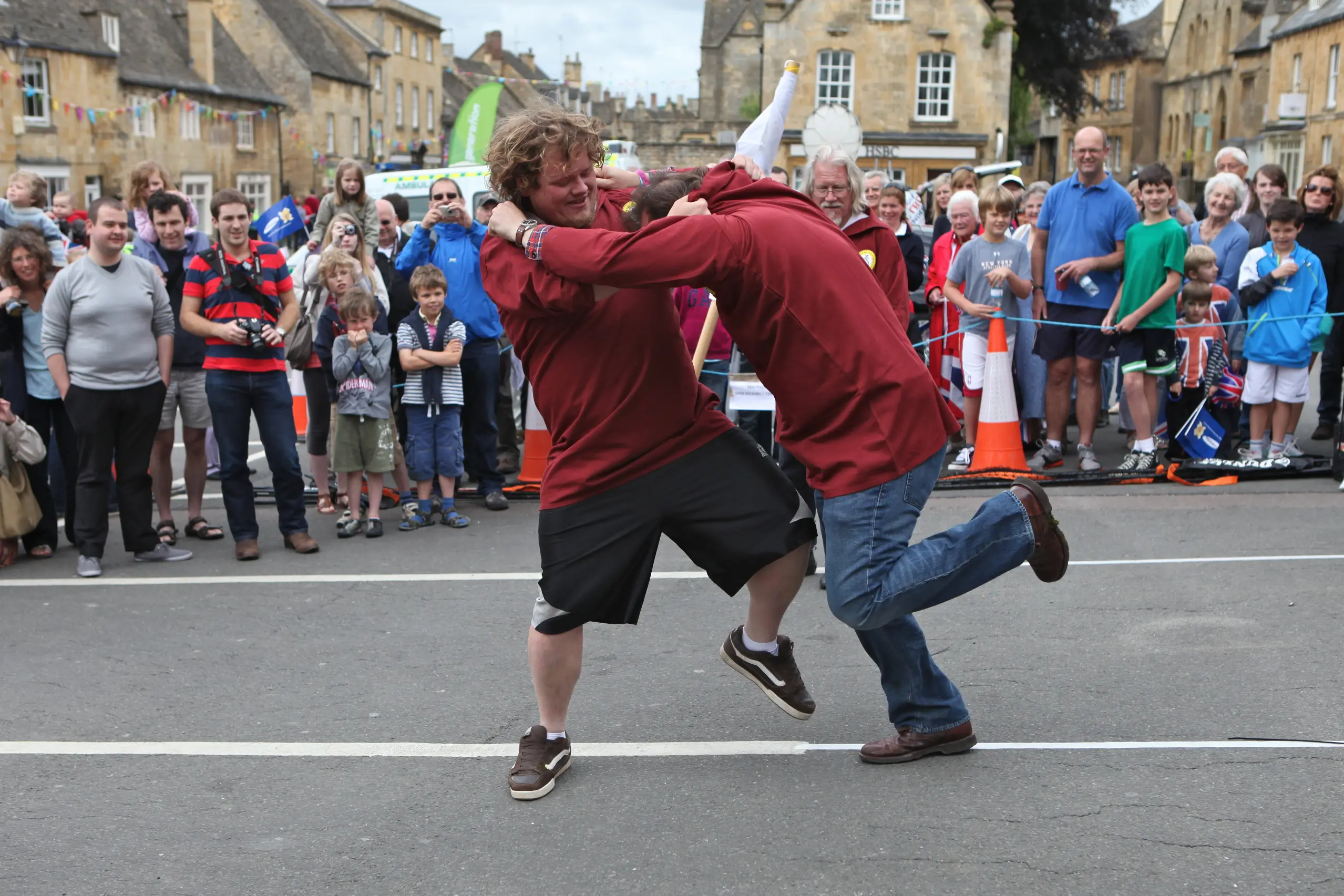
The image above shows contestants competing in a traditional shin-kicking match in the Cotswold section of England. Image courtesy of www.itv.com
Classic English Pugilism gradually evolved into the modern sport of boxing, yet early Pugilism texts discuss palm strikes and hammer fist attacks along with ways to use one’s hands and forearms to execute parries and blocks for incoming strikes. Indeed, early Pugilism texts outline several useful methods for defending oneself while avoiding becoming tied up in any grappling matches which only leave the grappler vulnerable to incoming kicks and strikes from other collaborating adversaries.
For those who are not familiar with the term “Cornish,” this term simply refers to the most southwestern part of the large British island that is now called Britania. Cornwall has its own Celtic language and its own distinct cultural heritage, so this portion of Britania is best understood as being like Whales or Scotland which are both unique nations within this large island.
Classic Cornish shin kicking methods are intense and effective, so any worthwhile study of HEMA would do best to incorporate these methods.
Part 8. We Need to Study Team Combat
HEMA practitioners must be trained to fight not just as individuals, but also as the members of a team. For ancient Greek Hoplites, there was an admonition given to new recruits: “When you are engaged in combat, keep focused on your front. Your comrades on either side will keep your flanks protected.” In many older battle formations, as long as they held together, this made their soldiers all but unbeatable. As HEMA continues to be revived, the incorporation of Team Combat must be incorporated.
HEMA is currently focused towards one-on-one combat between individuals in isolation, and this is not a bad focus; however, there is a certain ongoing development of interest in more, shall we say, non-lethal team combat that takes place between small groups who train together to fight as teams.
Thus, we would do well to start training people to use some aspects of old Greek Hoplite and Phalanx tactics in situations such as times when fighting breaks out inside of crowds that have gathered outside of sporting events, music venues, and political gatherings. Phalanx fighting tactics are also applicable during prison riots and when troubles arise on school campuses. Phalanx tactics can be applied by sourcing ad-hock items that serve as shields such as chairs, tables, cafeteria trays, cargo pallets, and garbage cans. Phalanx formations can also be bolstered by swinging and thrusting with makeshift weapons such as sticks and improvised clubs or whatever other items might be available when things get ugly in crowded places and other choices of weapons are unavailable.

Image of troubles in Charlottesville back in 2017 is furnished courtesy of wset.com
HOPLITES were ancient Greek Heavy Infantry who fought in close formations that were several ranks deep which also had men arranged in crossing files that were called PHALANXES. The men who marched in Phalanxes were armed with very long pikes called SARISSAS which were up to 23-feet in length. The length of these pikes varied depending on how far back along the file individuals were. From the front, these formations resembled something like giant porcupines which made them impervious to frontal attacks from heavy cavalry and chariots.
The only way a that cavalry could be used effectively against a Phalanx formations was in thrusting attacks, but then such frontal charges against a Phalanx usually proved to be deadly for those who were making these attacks. Phalanxes were not Articulated (No sub-units), so changing fronts was cumbersome and could only be accomplished by wheeling the whole formation around en masse. When moving in such formations, there was no refusing to mover nor was there any about facing.
Being part of an effective group fighting formation requires a great deal of training and practice, as well as some thorough physical conditioning. Back in the day, two Phalanxes that consisted of soldiers who were kitted out in full regalia would face off against each other during training exercises with the only difference between these exercises and real battles being that the replica Sarassa pikes which were used during training regimens had blunt points rather than sharpened metal tips. During these exercises, both sides would advance towards each other as leaders called out a cadence and give orders, a shoving contest with the Sarissas then began.
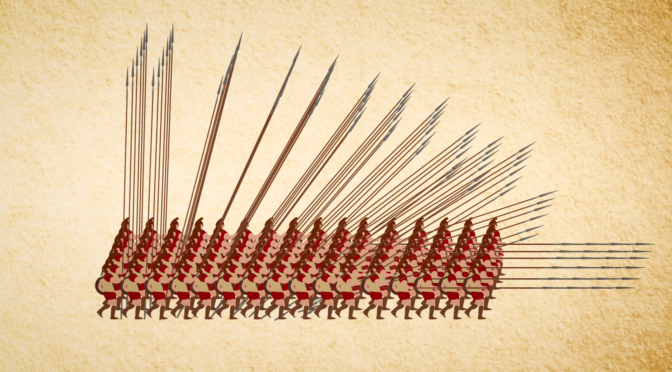
Image of an old Greek Phalanx infantry formation furnished courtesy of jg37 on the r/RealisticArmory forum from reddit.com
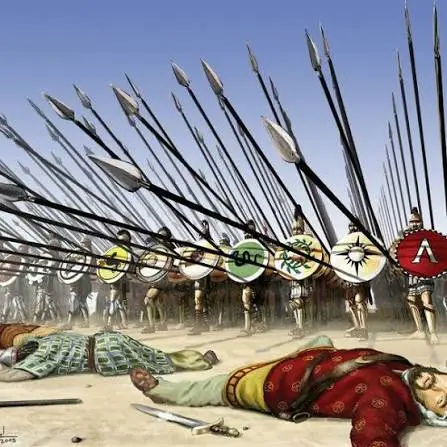
Image courtesy of Leonidas of Sparta Original on facebook.com
As opponents attempted to knock each other off of their feet, whenever a man went down, he they needed to stay down, but these downed men were also left alone. If, as sometimes happens, somebody tripped over somebody who was falling, or if they tripped over another soldier who had already fallen themselves, then they too would stay down. These training exercises continued until everybody on a side was down, or until both formations had become scattered and verbally conceded the field.
These old training exercises were carried out as much like real battles as possible; however, nobody usually got seriously hurt or killed in such exercises. Such military drills require a great deal of strength and endurance as well as strict discipline. Now, just as then, the oldest men were placed in the most rearward ranks, while the younger men stood within forward ranks. “The Strongest In The First” The reasons for such practices are obvious.
Part 9. No Sneaky Little “Nazis” Need Apply!
HEMA is a uniquely European type of martial art, so it will naturally attract contemporary National Socialists and other racially conscious European people. As of today, The Thule Society and other groups are actively working to establish devoted and exclusive European identitarian HEMA schools that train students to use weapons such as swords, knives, and sticks. These future Nationalist HEMA schools will also train their students in the arts of unarmed fighting.
At this time, HEMA’s European roots along with its growing popularity mean that HEMA’s growth has not escaped the attention of Jews, Blacks, and Whites with Communist leanings. For better or for worse, HEMA is now lumped into the same category as reenactments of Confederate battles that are conducted by living descendants of Confederate soldiers.
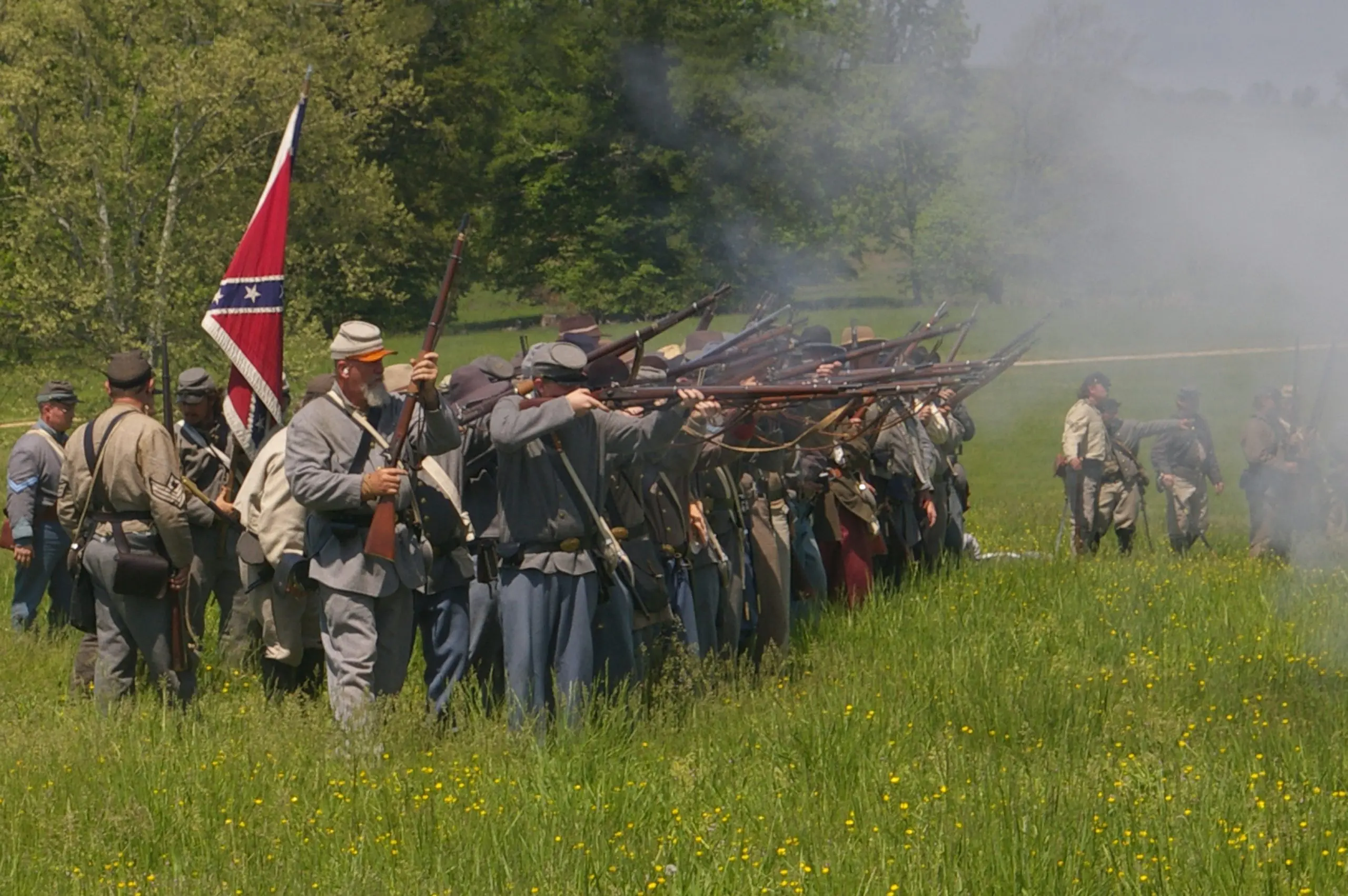
Image of a Confederate American Civil War reenactment furnished courtesy of Wikipedia.org
It seems that any activities which allow Europeans to reconnect with their culture and history are viewed with anger and trepidation by Jews and other assorted groups of nasties. As the old saying goes: If you sever a tree’s roots, then the tree will die. Severing European people from their roots is a key component in the present Jewish campaign to genocide and eliminate all European people; thus, there is an ongoing campaign to erase any and all European cultural roots as well. This attempt to eliminate European cultural roots takes the form of destroying statues and buildings, but it also includes initiatives to ban cultural activities like American Civil War battle reenactments and the study of historical European martial arts.
It turns out that even studying Medieval European history within an academic setting is becoming more politically and socially unacceptable in today’s political and academic climate, so studying HEMA represents this principle to an ever more severe extent. Those who wish to remove and cancel any academic study of Europe’s Medieval Era and Europe’s “Viking Era” claim that such studies are “Eurocentric” and they claim that these fields of study promote “racism” and “xenophobia.” Clearly, it seems that any exploration of their own history and their own heritage for today’s people of European descent is going to be met with political and institutional ire on the part of Jews, White Communists, and assorted non-Whites, or “Nons” as they are sometimes called.

Image courtesy of wojakland.com
As of the present, there have been YouTube videos posted that pearl-clutch about the problem of “White Supremacists” invading and subverting HEMA schools. Other online groups exist such as Fighters Against Racism of “FAR.” The YouTube channel named “Fighting Matters” has a fairly low subscriber count and this channel seems to focus on the issue of martial arts in general attracting too many of “the wrong element.” The Fighting Matters YouTube channels also stresses and frets about martial arts schools attracting “not the right kind of people,” when viewed from the perspective of this channel’s creators.
The Fighting Matters YouTube channel seems to want any person who does not hold properly “Progressive” or properly “Liberal” ideas get banned from joining any and all martial arts schools. This same channel also seems to want anyone who holds less than perfectly liberal ideas banned from competing in professional mixed martial arts fights. Well, what are this channel’s creators and guest commentors thinking? Do they imagine that martial arts practitioners and professional prize fighters are all going to be paragons of liberal virtue?

Image courtesy of Sabastian Milbank on X.com
One of the issues that comes up consistently on the Fighting Matters YouTube channel is a fear that the “Far Right,” and those gosh-darn “White Supremacists” and “White Supreme Pizzas” just might use martial arts clubs as a means of befuddling new and unsuspecting members into adopting a grab-bag of dangerous and unkosher ideas.
The idea that those dreaded White Supreme Sandwiches just might use martial arts schools to indoctrinate their naive but well-meaning club initiates is a bit of a misstep on the part of Jews and White Communists because any martial arts schools that are aligned with Italian-style fascism, Nation Socialism, or other such wayward ideologies really exist to serve people who already hold these unsavory ideas anyway: birds of a feather flock together.
The Fighting Matters YouTube channel produced a video that is titled “How HEMA Pushed Out White Supremacists (And What BJJ Can Learn)” The caption for this video reads, “HEMA VS NAZIS.” This hour-long video basically discusses how liberals who run some HEMA clubs and some more “progressive” HEMA schools can present themselves on their websites in ways that discourage any undesirable people from ever visiting their organizations in person or ever contacting them in the first place. There was also a bit of discussion about how to spot people who have joined a Kosher-approved HEMA school that have enrolled in order to learn how to fight better, yet they quietly dislike their school’s prevailing ideology.

Image courtesy of imagesizer.com
Liberal and “progressive” HEMA clubs and schools certainly will deter any applicants with National Socialist leanings from ever visiting the school in person or ever making contact with that school if they present the right signals, so the previously cited video certainly gets some talking points correct. National Socialists and Italian-style fascists need to start their own martial arts networks and HEMA clubs in the coming years because there is no point in mixing groups of people who do not like one another and do not jibe with each other at all.
Creating dedicated networks of National Socialist HEMA clubs and HEMA schools is a worthy project, but seeing this endeavor to completion will take some time, it will also demand some discipline, it will require a fair amount work, and it will requisition some degree of patience. At this time, many online resources exist that are provided to help interested students find nearby HEMA clubs and schools.
These resources also support HEMA teachers who wish to start their own clubs and schools. There is also the valuable resource of paper books about HEMA. Many online book sellers offer plenty of valuable resources for those who are looking to start their own HEMA clubs. Books about HEMA are cheap, they are open to all, and they are not gatekept by Trotsky’s disciples, so this is a great set of resources to access. Some of these online resource groups that help students find HEMA clubs and schools include:
The Association for Renaissance Martial Arts.
Historical European Martial Arts Resources
Wiktenaur is an open and free online resource website.
The HEMA Alliance provides solid legal counsel for those who are looking start their own nonprofit 501c3 HEMA clubs or HEMA schools. The HEMA Alliance’s legal counsel includes boiler-plate legal waver documents that protect a HEMA club against lawsuits stemming from injuries. Other legal resources include information about how to get your club or school insured and how to go about setting up Limited Liability Companies (LLCs) and 501c3 nonprofit organizations that help assuage any possible legal liabilities for injuries or hurt feelings.
Unfortunately, some of these “normie” HEMA resource organizations demand that their members sign affidavits which state that their future HEMA organizations will include members of all 900+ genders and include those who represent all races and creeds, yet the HEMA Alliance’s website also boldly states that they support “freedom of association” as well.

Image courtesy of imgflip.com
We recommend just keeping your mouth shut and letting any kosher-approved HEMA resource organization harbor their suspicions while you proceed to hold your nose and leverage their useful resources. As the old Italian saying goes, “Just put the donkey where the boss tells you.”
There is a decent chance that National Socialists and adjacent groups will need to build their own HEMA schools and clubs from the ground up by studying key historical texts then experimenting with the presented techniques on their own. However, some National Socialists might consider attending classes at established HEMA schools in order to learn from more experienced and more established HEMA practitioners, whatever their ideological leadings might be.

Image courtesy of wired.com
If any National Socialists wish to study with existing schools, then they will not necessarily need to pretend to be left-leaning Communists, but they will probably need to keep their personal opinions very quiet while attending training sessions and while interacting with other members of these kosher-approved HEMA schools outside of the classes and training sessions. In other words, if National Socialists wish to train at mainstream, kosher-apporved, or “normie” HEMA schools, then they need to keep their mouths tightly shut!
In today’s social climate, students and teachers at kosher-stamped and “normie” HEMA schools and clubs are likely to be on the lookout for thought criminals who fit a certain racial and demographic profile, and this Stasi “lookout” behavior will take the form of assessing a person’s appearance, evaluating a person voice, and noting a person’s body language more than studying a suspicious character’s actual chosen words. This sort of Marxist “Vibe Check” or “Sniff Test” is hard to fake their way through for National Socialists, but National Socialists can simply let the Trotskyite Stasi officials play with their butt plugs, massage their suspicions, and think what they like.

Image courtesy of Myskerm on pinterest.com
The upshot of Jews wishing to see any and all European cultural activities banned will mean that HEMA schools and other martial arts schools will be intensely watched by Jewish-occupied governments in the coming years. HEMA schools and other martial arts clubs already function as networking channels as opposed to “recruitment organizations” for National Socialists and other aligned groups, so we can all expect to see HEMA schools become more harassed and more intensely monitored in the coming years.
We might even see a time in the coming years where only Kosher-certified and government-approved HEMA schools will be allowed to operate legally within certain parts of Europe and elsewhere. While these Zionist Occupied governments scramble to monitor and police HEMA clubs and other martial arts organizations, the Jewish-controlled media will endlessly and viciously attack HEMA clubs and HEMA schools for being nothing more than dens of domestic terrorist conspirators and enemies of the state. Under such circumstances, all martial arts schools can expect to see frequent raids and they can also expect to see crooked Zionist bunker-regime governments try to send their own stooges and lackeys into these organizations to act as saboteurs, rats, and informers.

Image courtesy of imgflip.com
The penalties for operating unsanctioned HEMA clubs could also get fairly draconian in the coming years as the Jews and their lackeys get more desperate to quash any European resistance to their vile plans. In the near future, these hounded HEMA schools might do well to designate one or more members to vet incoming members and continue to assess new members in order to determine if they are infiltrators or not; regrettably, this “bunker mindset” is unfortunate but such practices are also a necessary evil in today’s world. Harold Covington provided some good resources along the lines of sniffing out rats and informers, but plenty of other resources exist in this department, many of them are Communist in origin, but they still contain good reference material.
Part 10. Random Notes
The Blackthorn Walking Stick or the “Shillelagh” –
The Blackthorn Walking Stick is a well-known Irish weapon, as well as a fine type of walking stick. This item was often used during the Irish guerilla war against British Crown Rule. In contemporary times, learning to fight with classic Shillelaghs makes a certain amount of sense because one can always claim that their Shillelagh is nothing more than a walking stick. There is also a traditional Irish art where students learn how to fight with Shillelaghs.

Image courtesy of wojakland.com
The top end of a Shillelagh is curved slightly and it functions as a handle while a person is “innocently” walking with it. One can suddenly toss a Shillelagh up into the air and grab it near its tip with both hands, then proceed to swing it with all their might, preferably at an antagonist’s head. Blackthorn is so dense that the effect of Shillelagh strikes is like hitting somebody with a steel pipe. If you hook somebody under the lower jaw with the curved handle of a Shillelagh, then you can just about decapitate them.
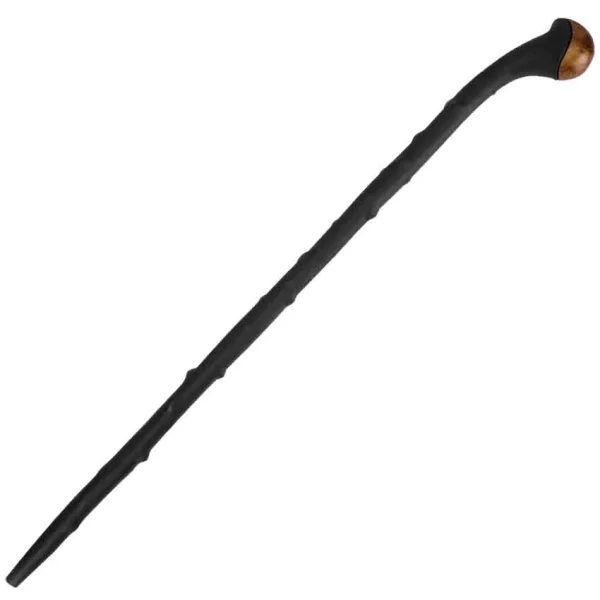
Image courtesy of amazon.com
A Shillelagh can be used as either a stabbing weapon or it can be used like a quarterstaff. One can rapidly switch back-and-forth between a stabbing weapon and a staff when using a Shillelagh. When your opponent is focusing on the staff, then you stab. When your opponent is focusing on the tip, then you crack him upside the head with the staff. I have actually fought off packs of dogs by using one of these items myself.
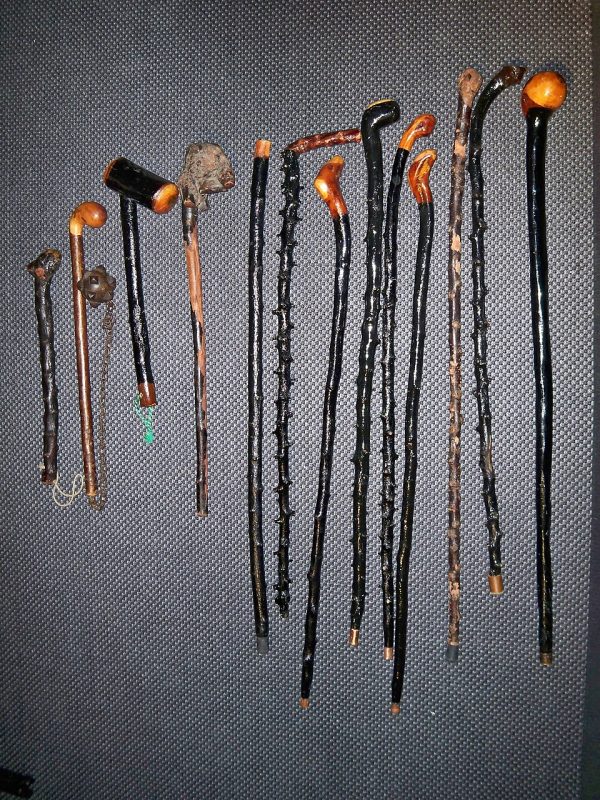
Image of assorted Shillelaghs furnished courtesy of Wikipedia.org
Highland Games & Highland Warfare
The Scottish Highland Games originated at a time when England occupied the Scottish Highlands and the English forbade on pain of death any Scots from possessing any kind of weapons. (This type of scenario is almost in effect in Germany, England, Canada, and Australia for European people as of 2026.) The Scots invented the Highland Games as a way to keep themselves in top physical shape while they waited for the next war to drive the English from Scotland. Something like the old training regimens for Scottish Highland games should most certainly be incorporated into the reemerging HEMA scene. Contemporary HEMA schools would do well to incorporate Renaissance Era physical training into their curriculums in order to reconnect with history and to develop what might be called “functional strength.”
Training with weights in gyms does not provide what might be termed “functional strength” as well as older types of physical conditioning because modern weight-lifting equipment targets specific muscle groups in isolation and tends to emphasize confined linear movements during exercises. By contrast, older strength training methods are less focused on set movements, so they force muscle groups to strengthen for scenarios that are more similar to real-world fighting situations.

Image courtesy of wojakland.com
Pilums –
These were the javelins that were used by the Roman Legionaries. Roman legionaries could, at close range, hurl them with such force that they could stop a charge of plate-male armored heavy cavalry. During the Renaissance Era and during the Medieval Era, European soldiers and knights regularly threw heavy wooden javelins to build explosive strength, so incorporating javelin tossing into daily training regimens might be beneficial in today’s times.
When the Tough Guys Tumble –
During the Renaissance Era, the study of classic fair and carnival tumbling along with classical acrobatics was applied as a means of improving physical health and as a vector for improving fighting skills. During the Medieval Era, knights also studied tumbling to improve their physical conditioning, but also to improve their balance, and to improve their agility.
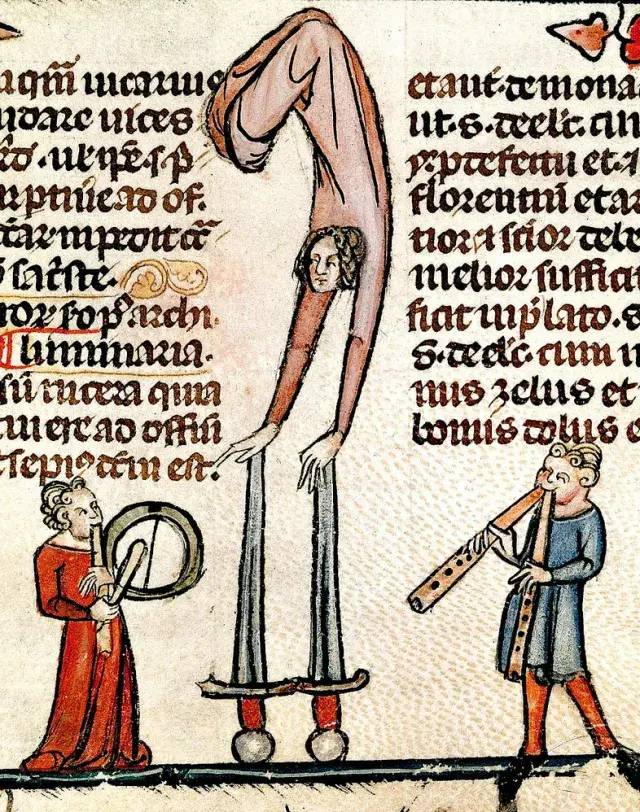
Image courtesy of cassidycash.com
A few HEMA demonstration videos incorporate amazing Renaissance Era acrobatic and tumbling skills into their routines; therefore, some HEMA enthusiasts might wish to study classic European tumbling along with other disciplines. Increased flexibility certainly has the potential to improve each practitioners HEMA skills, so studying classic acrobatics has its practical value.
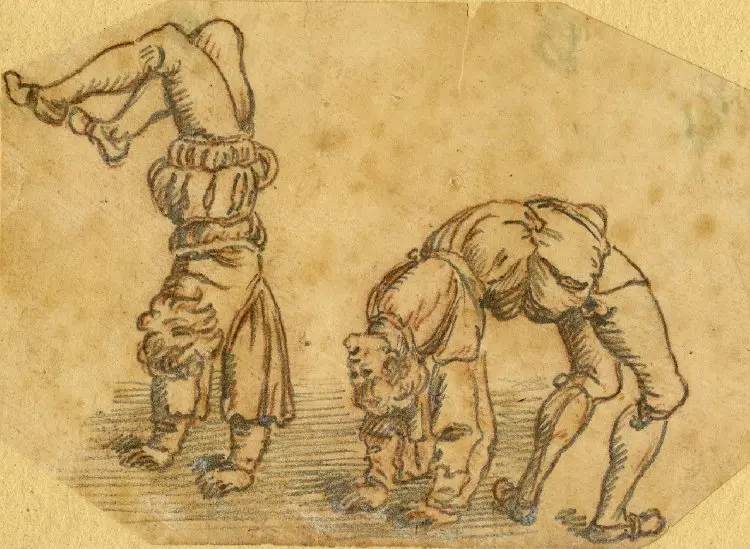
Image courtesy of cassidycash.com
At this time, nobody offers classes or training programs that are dedicated to studying classic European acrobatics and “Tumbling,” but a few historical treatises about this topic survive into present times. A few of these treatises include: Trois Dialogues de l’Exercice de Sauter et de Voltiger en l’Air (1599) by Archange Tuccaro, and De Arte Gymnastica (1569) by Girolamo Mercuriale.