

Are 20th Century Feminists Poisoning Today’s Dating Market?
➡︎ Boomer Attitudes About Marriage, Pair-Bonding, and Relationships
Individual results varied, but in a broad general sense the Boomer generation had an easier run of things in the arenas of romance and pair-bonding than “GenXers” or later generational cohorts such as the “Millennials” or the “Zoomers.” For starters, the statista.com website notes that in 1960 around 45% of American adults between the ages of 18 and 24 were married, but the percentage of American adults between 18 and 24 who were married was only 9% according to the 2010 Zio-American Imperial census. Obviously, something has changed quite a bit since the proportion of young adults who were married in 1960 versus 2010 had declined 36%. This same official source notes that as of 1960, 86% of Zio-American adults in the 35 to 44 age-bracket were married, but in 2010 this percentage had fallen to 62%.
Recent data from the 2020s also paints an unhappy picture of the dating and marriage scene across the Zio-American Empire; for example, a 2022 Pew Research survey found that 63% of men from age 18 to 29 reported being single, yet only 34% of women in this same age group reported being single. Interestingly, this same survey was conducted in 2019, and the exact same set of results were tabulated. The 2020 official Zio-American Imperial census revealed that 51% of the adult population was single and the average age of marriage for men had risen to 30.2 and for women this number had risen to 28.4.
By contrast, in 1956, the average age of marriage for Zio-American males was 22.5 and for females this number was 20.1 In 2024, the marriage rate for the Zio-American Empire was 6.1 people getting married per 1,000 members of the general population over the course of one calendar year; whereas, this number was 8.5 in 1960.

Image courtesy of theguradian.com
So, as noted by Statista.com’s findings, why are 63% of young man claiming to be single while only 34% of young women claim to be single? A 2023 study conducted by the General Social Survey seems to refute any claims that there is such a disparate rate of single men in their 20s versus single women in their 20s. What the referenced study by the General Social Survey uncovers is a 10% disparity in the number of single women versus single men in the 18 to 29 age bracket, but this disparity is mostly due to young women dating older men with more wealth and more accumulated social standing. There also seems to be a bit of difference between men and women concerning the definition and concept of what constitutes being single; none the less, survey trends still indicate less sex happening for both men and women when comparing the 2020s to previous decades.
Many people have also speculated that the rise of “Situationships” may constitute one reason why more women in their 20s claim to be in relationships than men in their 20s. “Situationships” are defined as being romantic and sexual relationships between men and women that are characterized by a lack of formal boundaries and a lack of formal expectations. Situationships seem to be defined as being a man and a woman who are more than simply friends but less than dedicated partners.
Some commentators have stated that a “Situationship” exists when a man likes a woman enough to have sex with her, and he likes a woman enough to spend time with her, but he does not like a woman enough to make a formal commitment to her. One could make an argument that the rise of “Situationships” is really a sneaky way for polygamy to reassert itself because situationships are implicitly non-exclusive; therefore, such arrangements allow an individual man to maintain an informal and small harem of women who he is having sex with somewhat regularly but to whom he avoids offering commitment. The term “Situationship” is officially credited as having appeared in a 2017 article in Cosmopolitan magazine that was authored by Carina Hsieh.

Image courtesy of prostockstudio.com
Situationships do not necessarily involve one man maintaining continual sexual relations with more than one woman, but situationships often do involve men wanting to “keep their options open.” In this case, “keeping options open” means holding out on offering formal commitment until better romantic possibilities present themselves.
Some articles have appeared in recent years that lament the frustration which many women feel when they find themselves stuck in situationships; however, the female hive collective really has no leverage points at all when dealing with top-tier and high-value men who place individual women in unhappy situationships that can drag on for indefinite amounts of time.
For women who are older than 30, or worse yet, for women who are older than 33, being stuck in situationships with men who are avoiding commitment represents a real problem. For aging women, being stuck in situationships makes finding men who will father their children, then remain present and properly invested more difficult. Interestingly, a 2024 survey conducted by YouGov found that around half of all Zio-American adults aged 18-34 admitted to having been in a situationship at least once. Despite many people of both genders reporting being in a situationship at least once, being stuck in situationships is for the most part a uniquely female problem because most men only have casual sex around 3 times during their lifetimes. For most men, with the exception of visiting prostitutes, almost all their lifetime sexual activity happens within the confines of formal committed relationships.

Image courtesy of mixxer.com
At this time, many online evaluations exist that help women determine if they have inadvertently stumbled into situationships; these services offer a needed function because situationships very rarely transition into marriages. Even for women who are not feeling intense time pressure to have children before their fertility window collapses, being stuck in situationships still creates a lot of uncertainty and it fosters a sense that they are options but not choices for the men who they are romantically involved with in a casual and not fully committed manner.
If “high value” men have plenty of options for sex and female companionship, then there are no real leverage points for the women who are unwillingly kept in the limbo of “situationships.” If there was true female unionization and solidarity pertaining to the matter of demanding commitment before having sex, then the prevalence of situationships could most certainly be curtailed. Situationships seem inevitable in our time because intergender female competition for the most desirable single men undermines any large-scale female cooperation that might potentially decrease the number of situationships.

Image courtesy of stock.adobe.com
In summary, the rise of situationships makes dating harder for everyone because women fear finding themselves drifting into long-running but fruitless arrangements with men who will never offer them the things they really seek. Naturally, the rise of situationships makes women more apprehensive about entering relationships with men in general, and the rise of situationships creates an environment where a smaller pool of high-value men often occupy the time and the romantic attention of women who would most likely be better off settling for men who are less flashy and alluring but more dependable and committed.
The Tale of Nots
When analyzing the mating and marriage lives of the Boomer generation, it seems that what defines their experiences when viewed from today’s perspective is not so much what they experienced in their quests for finding spouses and procuring children, but what they did not experience. Cleary today’s dating and marriage situation is filled with many pitfalls that the Boomer generation simply never had to deal with.
Trouble in School
In the 1950s and 1960s colleges and universities were unofficially viewed as meeting spots and marriage markets for the professional class; however, for quite a while now universities have failed to function as marketing funnels for marriages. As of 2025, only around 7% of all Zio-American undergraduate university students were married, and this number only rises to 8% within a year of graduation, so as of the 2020s, Zio-American universities are not pairing people together in fruitful and productive ways for whatever the reasons might be.
Classes have been a great venue for men and women to meet each other then to pair off and form families, but in more recent times there have been numerous incidents where men were punished by school administrations at colleges and universities for simply trying to flirt with women. When we say that male college students have been punished for trying to flirt with female students on college campuses, we are speaking about unfortunate male students receiving visits from the campus police or summons from the dean’s office.
At some point it is worth noting that the feminist author named Susan Brownmiller wrote a 1975 book titled “Against Our Will” which basically averred that men and women are largely the same from a phycological and mental standpoint. Brownmiller also argued that rape has less to do with male sexual desires and more to do with men using rape as a tool of fear and intimidation which is designed to keep all women in a subservient role.

Image of Susan Brownmiller (Warhaftig) in 1975 furnished courtesy of Julie Blindel on X.com
Consider the Source
As noted in her Wikipedia entry, Brownmiller’s family name at birth was Warhaftig, and she was the daughter of Jewish immigrants from the Polish shtetl. Young miss Warhaftig attended the East Millwood Jewish Center School as a child, and she claimed that her study of Jewish history held strong parallels to the international plight of women. Prior to getting involved in feminist activism, Warhaftig was extremely involved in political activism across the Former Confederate states. Warhaftig’s political agitating involved her and other Jews actively trying to leverage Black racial grievances and Black points of group interest for their own personal gain and for Jewish group advantage.
Warhaftig was a member of the Congress for Racial Equality in the 1960s after dropping out of Cornell University. Warhaftig also participated in the Freedom Summer program of 1964 which involved a collection of Jewish Bolsheviks and well-meaning but naive White liberals from outside of Dixieland. The “Freedom Summer’s” cast of characters all worked to try and get as many poor Black citizens in the State of Mississippi as possible to register and vote. Not surprisingly, the local White citizenry of Mississippi truly resented this outside incursion, and during the 10 weeks of 1964’s “Freedom Summer” three outside activists were killed and around 80 were injured by local Whites in Mississippi. The list of dead from “Freedom Summer” included one Black activist named James Chaney, and two New York Jews named Andrew Goodman and Michael Schwerner.
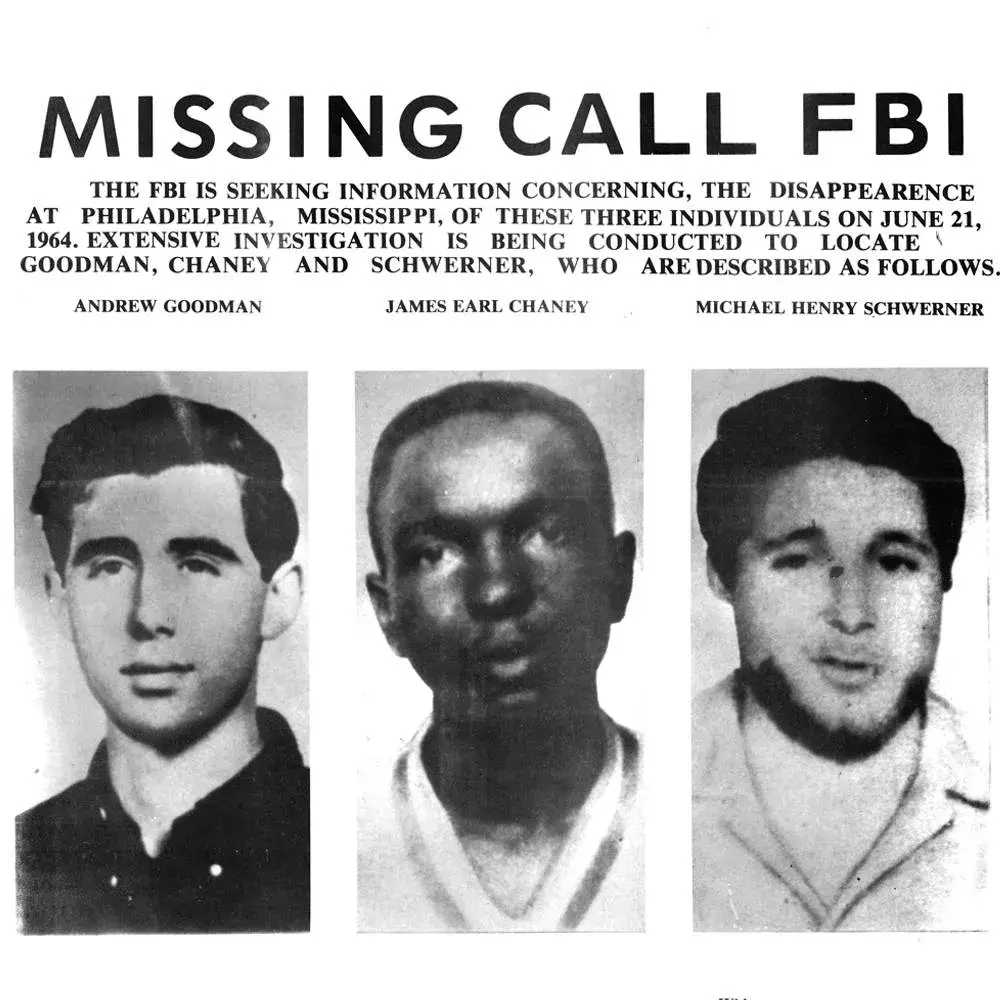
The image seen above is an archival reprint of an actual FBI poster relating to the “Freedom Summer” campaign of 1964. Image courtesy of blackcatholicmessenger.org
Through his participation in the “Freedom Summer” campaign, James Chaney was probably looking to better his own personal circumstances by gaining social capital from his high-profile political activism, but Chaney probably also had a true interest in bettering the lives of his own people. On the other hand, one must wonder what the true motivations were for so many of the Jews who funded, organized, and directed the “Freedom Summer” program of 1964.
Here is a quote taken directly from the “Freedom Summer” Wikipedia page:
More than 1,000 out-of-state volunteers participated in Freedom Summer alongside thousands of black Mississippians. Volunteers were the brightest of their generation, who came from the best universities from the biggest states, mostly from cities in the North (e.g., Chicago, New York City, Detroit, Cleveland, etc.) and West (e.g., Berkeley, Los Angeles, Portland, Seattle, etc.), usually were rich, 90 percent were white. About half of them were Jewish.[6] Though SNCC’s committee agreed to recruit only one hundred white students for the project in December 1963, Jewish civil rights leaders such as Allard Lowenstein went on and recruited a much larger number of white volunteers, to bring more attention.[7] Two one-week orientation sessions for the volunteers were held at Western College for Women in Oxford, Ohio(now part of Miami University), from June 14 to June 27,[8] after Berea College backed out of hosting the sessions due to alumni pressure against it.[9]
It is easy for the unsuspecting to see the “Freedom Summer” campaign as a heroic stand against injustice, but one must also keep in mind that this whole event was sponsored and directed by Jewish political agitators, so the motivations for such actions were not carried out to better the lives of Black people. Instead, the motivations behind the “Freedom Summer” were actually to further Jewish political interests. Warhaftig’s actions during Mississippi’s “Freedom Summer” closely mirror the actions of Jews during Germany’s Weimar Republic era when Jewish Bolsheviks claimed to be selfless advocates for German workers while secretly working to further their own Jewish racial interests by gaining more political influence. The “Civil Rights” campaigns of the 1960s were just Jewish Bolshevik power grabs which leveraged the discontentment of one group so that this disgruntled demographic could form a political platform that served Jewish interests.
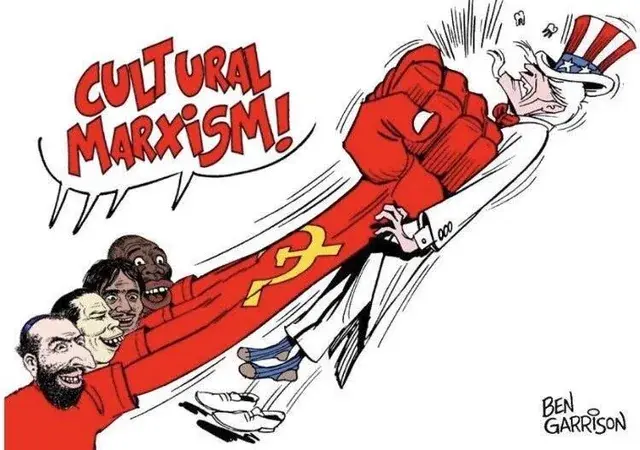
Image courtesy of r/Judiasm forum on reddit.com
The Zio-American ”Civil Rights Movement” of the 1960s is best understood from a current historical perspective as being a Jewish-led and Jewish funded campaign of racial Communism which persists into the 2020s. Racial Communism operates within the same basic moral and philosophical framework as classic Communism from the 19th and 20th centuries. However, racially based Communism swaps the targets of Bolshevik demagoguery away from urban lumpenproles, like it does with classic Marxism. Racial Communism also shifts its target of attack away from the or grievances of rural fellaheens. Maoism is simply Communism that harnesses the grievances of an impoverished peasantry. Racial Communism instead weaponizes endlessly stewing ethnic resentments. Classic Communism focused its energy on harnessing resentment that was based on economic class issues, but economic class is less fixed and immutable than racial grievances. The fixed and immovable nature of racial grievances makes newer forms of racial Communism much more dangerous and much more useful to Jewish Bolsheviks. Brownmiller’s involvement with the “Civil Rights Movement” essentially proves that she was a Communist in practice if not in title.

Image courtesy of wikipedia.org
Brownmiller’s Critics
Critics of Brownmiller’s work, such as the American anthropologist named Donald Simmons, noted that what Brownmiller was really preaching was the concept that women should be able to simply do as they please while men are to live within a sexual ecosystem where female whims and female desires are the key issue in all sexual and social dealings. Simmons’s concern was that if the initiative for starting all romantic activity were to rest squarely on the shoulders of females, then humans would simply fail to reproduce in sufficient numbers.
Essentially, Donald Simmons postulated that male sexual drive and male sexual initiative are a needed element for humanity to perpetuate itself. Simmons has also posed this question, “Would women collectively want the kind of men that never take sexual initiative?” Thus, men need to take some romantic initiative in their dealings with women. F. Roger Devlin has stated that men must pressure women for sex at least to some degree if enough children are to be borne, and Devlin has theorized in his Counter-Currents articles that most men need to be “Sexual predators” and “Stalkers” and “Sex-pests” to at least some degree if romantic relationships are to ever happen in sufficient numbers.

Image courtesy of glamour.com
True, some very desirable men never need to take any sexual initiative at all for romance with women to occur, but most rank-and-file males need to actively pursue relationships with females. If men are to have sex with women, then there must be some sexual desire in place. Men need to have some degree of mental desire if erections are to manifest, so we can say that man must lust after women to some degree if the human race is to reproduce naturally. In short, reproduction requires a bit of male lechery.
Brownmiller’s ideas may seem reasonable at a glance, but her critics have argued that she is really advocating for creating a social ecosystem where men must always adhere to very strict behavior codes that are arbitrarily set by women. Many great and functional people never marry for whatever the reasons might be (neither of the Wright Brothers ever married), so society should not view single men and women who do not have any children as vermin, but it is worth noting somewhere that Brownmiller never married nor had any children. Brownmiller’s lack of any husbands or sons over the course of her life certainly never helped her develop any positive and empathic understanding of the male life struggles and issues. The fact that Brownmiller never had a kind and loving husband in her life likely provided her with nothing to counter her instinctual discomfort with male nature and male sexuality.

Image courtesy of medium.com
Essentially, Brownmiller is arguing that all male behavior must be governed by women in the most comprehensive and draconian manner imaginable. As stated by F. Roger Devlin, the world that Brownmiller had envisioned is marked by “Sexual Anarcho-tyranny,” meaning anarchy for womens’ sexual behavior and tyranny to police every aspect of mens’ sexual nature.
Truly understanding what motivated Brownmiller to do as she did after her death is impossible, but we can speculate that this Jewess was trying to undermine fertility for non-Jewish women and perhaps Brownmiller was intent on destroying the non-Jewish family unit as her Jewish Bolshevik predecessors have always done. The concept that Feminism is just female “Mating Suppression” writ large has also been postulated by some thinkers. The concept of “Mating Suppression” asserts that across the animal kingdom members of the same species and the same gender work to undermine the fertility of those who they are competing against for resources. According to this same theory, human females work to undermine the fertility of other human females just like countless other species across the animal kingdom do in order to increase the survival odds of their own offspring and thus ensure the success of their own genetic lines.
According to the Mating Suppression theory, human females will encourage other human females who are competing with them for resources to pursue behaviors that are maladaptive. Mating Suppression can mean encouraging behaviors that are bad for individuals and for the group such as refusing to get married for political reasons or refusing to have children for the sake of environmental protection. Various theorists have also averred that Feminist ideology has constantly suppressed female fertility if nothing else, so under this line of reasoning Mating Suppression is a way for less attractive women to improve their mating chances.

Promoting Feminism and “Women’s Liberation” may simply be a strategy for Jewish women to promote Mating Suppression against Non-Jewish women. Women who embrace very liberal ideology are certainly less likely to ever marry or have children, and if they do have any children at all, then they will have fewer of them. Image courtesy of vecteasy.com
Aside from Mating Suppression strategies potentially bolstering the mating success of less desirable females, Mating Suppression strategies can also be applied to entire races and entire ethnic groups; therefore, if Jewish women push feminist ideology onto non-Jewish women, then such activities can be viewed as Jewish attempts to suppress the fertility of women from rival groups.
Brownmiller’s Ongoing Legacy
Brownmiller’s book also followed the establishment of formal Zio-American imperial spousal rape laws in the early 1970s. Soon after Brownmillers book titled Against Our Will was published, “Take Back The Night” marches were organized by campus Womens Studies departments at various Zio-American universities during the late 1970s. The “Take Back The Night” marches that were organized by college campus Womens Studies departments were culturally significant because they proposed the idea to the general public that female solidarity and the legal system should be looked upon to deter potential male rapists and troublemakers as opposed to the actions of well-meaning men.
Even beginning in the 1970s, critics of Brownmiller’s ideas have stated that the concept of legal systems and female solidarity safeguarding women against rape and unwanted sexual advances is an inherently lesbian idea that certainly has not been held by most women throughout human history. Brownmiller’s ideas along with “Take Back The Night” marches on college campuses were poisonous to relations between men and women because Brownmiller’s ideas imply that men are not women’s natural protectors and guardians. Brownmiller forwarded the idea into the Zio-American Empire’s collective consciousness that men in general are dangerous threat-in-waiting to all women.
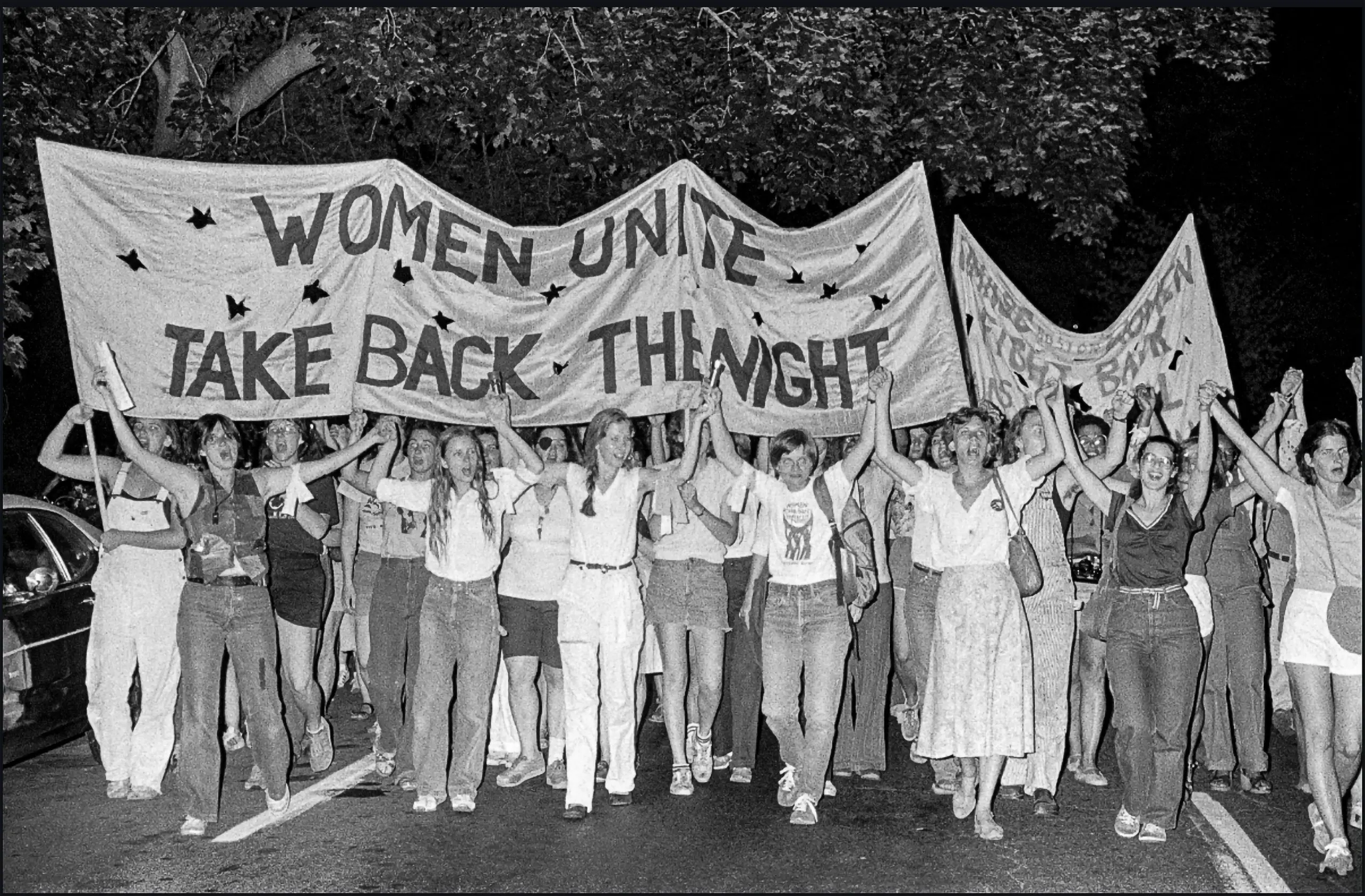
The image seen above shows a “Take Back The Night” march in Boston back in 1979. Image courtesy of takebackthenight.org
The first known Womens Studies college course was offered at Cornell University in 1969, and the San Diego State College, which is now called San Diego State University, opened the first Womens Studies department in 1970. The first “Black Studies” university department appeared at San Francisco State University in spring of 1969, so there is a lot of common ground between every type of ethnic studies department on college campuses such as Black Studies, Asian Studies, Chicano Studies, and Womens Studies. Yes, these departments actually do exist at many Zio-American universities, and these departments of “academic study” are all outgrowths of the Civil Rights act of 1964. All of these “academic” areas with a “studies” name tacked on at the end of them are basically partisan advocacy groups for what are fundamentally Marxist politics that consist of endlessly filing grievances of various types.
Filing official grievances always accompanies making demands for redresses of stated grievances through some types of institutional channels; thus, making and submitting institutional grievances can be understood as a strategy for making power grabs and looking for ways to commandeer resources.
Womens Studies departments essentially operate under an antagonistic and Marxist framework concerning how men and women are to relate to one another. Womens Studies departments essentially preach the idea that men have oppressed women for too long; therefore, women need to group together and assert their collective power through a revolution that would place women in a dominant position over men. Basically, Feminism and Womens Studies departments are just one more permutation of Marxism and Communism, and Communist revolutions are all fundamentally Talmudic and Jewish in nature. Communist revolutions are fundamentally driven by hate, envy, and a desire for power and plunder, so such revolutions always end poorly for everyone who is involved.

Image furnished courtesy of the r/leftistvexillology forum on reddit.com
The rise of college campus Womens Studies departments was an outgrowth of the “Civil Rights” movement that focused on ending Segregation in the American South, but the “Civil Rights” movement was also an outgrowth of the Civil Rights Act of 1964. The Civil Rights Act of 1964 effectively functions like a second Zio-American Imperial constitution which undermines the first constitution that was established in 1781. The Civil Rights Act of 1964 violates the original Zio-American Imperial constitution in many ways, but the original constitution’s First-Amendment right to free association is the Civil Rights Act’s most obvious transgression.
The rise of college campus Womens Studies departments was also an outgrowth of the National Organization of Women which was a “Civil Rights” organization that was founded in 1966 by a Jewess named Bettye Naomi Goldstein or Betty Freidan. Freidan was never officially a registered Communist; however, during here time as a graduate student at the University of California at Berkeley she was a known friend and associate of several people who were well-known to be card-carrying Communists. Freidan’s Communist leanings are worth noting because they provide insight into her basic motivations and her basic outlook on life – it is important to consider the source when analyzing Freidan’s social and political legacies.

The image above shows Bettye Goldstein “Freidan” in 1960. Image courtesy of wikipedia.org
Freidan is also well known for authoring a 1963 book titled The Feminine Mystique. Freidan’s Feminine Mystique book advocates for women to enter the workforce and seek careers as much as possible, and this book also compares being a housewife to living in one of the Third Reich’s “Concentration Camps.” Needless to say, Freidan’s book painted a dismal picture of married life for women along with a dismal picture of having children and raising them.
As of 2025, Freidan’s crusty old Feminine Mystique book gathers more dust and slips further into humanity’s collective historical archives, yet this book still maintains a powerful cultural legacy due to its strident advocacy for women to pursue careers as opposed to seeking fulfillment through marriage and family life. Freidan’s old emphasis on female careerism over family life is still alive and still very much with is in the 2020s, but traditionalism is slowly reasserting itself.
One of the great ironies that is attached to the idea of legal systems protecting women against male rape and unwanted sexual advances is the fact that laws which are passed by female legislators still need strong men to go forth and enforce them at some point. Interestingly, it was also Brownmiller who coined the phrase “Date Rape.”
Brownmiller’s ideas were later carried forward by Marry Koss at Kent State University in Ohio. Koss basically read Brownmiller’s work, then created studies that were released in 1982 and finalized in 1988. Koss’s studies claimed that 27.5% of American female college students were the victims of sexual assaults and attempted rapes. The train kept rolling for Koss’s work with the 1988 publication of Robin Warshaw’s book titled “I Never Called It Rape: The Ms. Report on Recognizing, Fighting, and Surviving Date and Acquaintance Rape.” Warshaw’s book segued into the college campus moral panic of “Date Rape” that afflicted Zio-American college and university campuses during the 1990s.
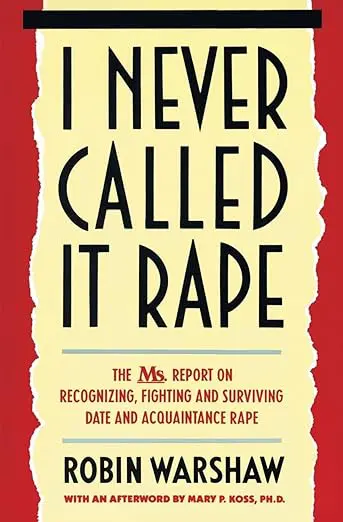
Image courtesy of Amazon.com
The “Date Rape” moral panic of the 1990s was largely confined to college campuses, and yes, the “Date Rape” moral panic of the 1990s did become the stuff of Saturday Night Live comedy sketches during that decade on account of “Date Rape’s” extreme and screeching nature. As absurd as the old 1990s “Date Rape” moral panic might have been, this relatively brief episode did quietly go about creating and cementing a society-wide concept that all men were potential predators against women, even when women are out on dates with men, and even when women are living in homes with men as married and co-habiting partners.
College campus date rape accusations at Zio-American university and college campuses during the 1990s even went so far as to include women who felt regret about unhappy one-night stands and felt entitled to accuse their male sexual partners of “Date Rape” at later times. One big problem with this trend of coeds leveling college-campus “Date Rape’ accusations was that no signs of violence were needed to form a date rape accusation on the part of the woman, and the woman did not need to furnish tangible physical proof of having been raped by her male date or male acquaintance. Needless to say, “Date Rape” accusations often boiled down to the slinging of unproven accusations and along with plenty of hearsay.
The idea of sexual harassment in the workplace was also applied to female college students and their professors during the 1990s, and later the idea of “Stalking” was added to the list of male disfunction on college campuses; therefore, in 1990 the state of California passes the first anti-stalking law. The crime of “Stalking” is meant to protect women against men who are interested in them; however, these clueless and misguided men will simply not take a proper “NO” for an answer. In such cases, these miscreant male “Stalkers” follow women around in hopes of getting a date; however, these women naturally and rightfully feel threatened by the very presence of such “stalker” men. According to this same logic, all men are to be regarded as predators and threats to womens’ collective safety as was clearly established by Mary Koss and Robin Warshaw.

Image courtesy of today.usc.org
These Anti-Stalking laws that fed off the “Date Rape” moral panic of the 1980s and 1990s may seem reasonable at a glance on the grounds that men must get in the vicinity of women if they wish to rape or kidnap them, but the existence of these laws essentially makes any unwanted male attention that is given a woman into legally reportable and legally punishable offenses. In other words, men who are trying to flirt with women in public and semi-public places can be accused of stalking and even punished by law for such offenses.
Aside from the legal aspects of “Stalking” laws and “Date Rape” hysteria, the mere existence of stalking laws and the very existence of a moral ecosystem that is populated by the concepts of “Date Rape” and “Stalking” seems to imbue women with the idea that all men are rapists-in-waiting and any physical proximity that men may have with women is to be interpreted in a threatening manner. The concept of “Stalking” and its accompanying legal boogaboos implies that any attempts that a man might make to socialize with a woman is to be viewed within the context of threatening conduct.
To a large extent, when women complain about being “stalked” or “sexually harassed” such accusations are usually being somewhat unfairly leveled against men who are simply not the most physically attractive and those men who lack high-status. If accusations of “stalking” and “sexual harassment” are really determined more who is doing something as opposed to what is actually being done, then the legal system and other institutions need to keep this factor in mind when handling such cases.
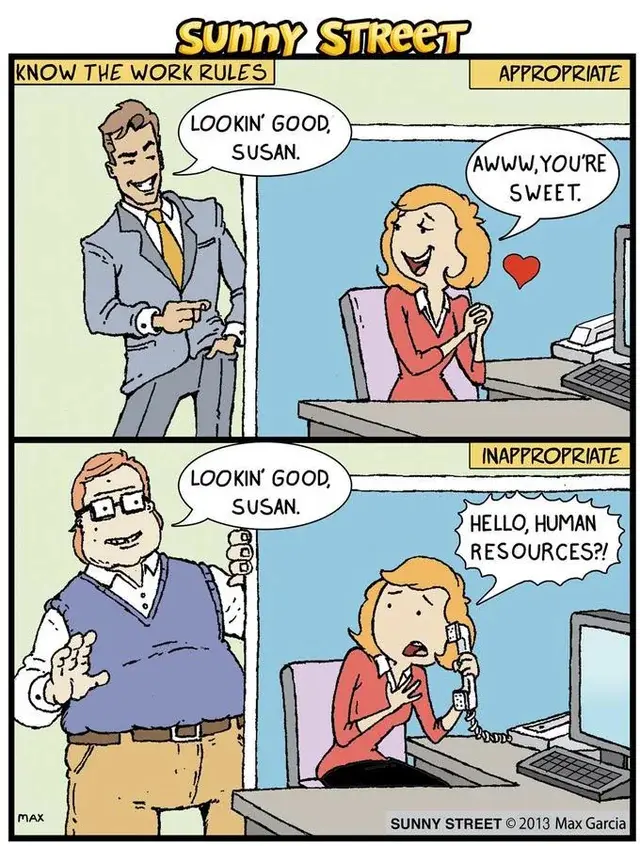
Image courtesy of thehappytelent.com
In defense of the women, “stalking” laws do have a legitimate place within the legal system of any decent society. If a man seems to be unable to understand that a particular woman is not the least bit interested in him sexually or romantically, then at some point he must get the message and move on. The real problem with “stalking” laws is that they tend to be applied a bit too frivolously and a bit too liberally by modern women.
In a more sensible and more just world, when a man simply tries to flirt with a woman or ask a woman out on a date such actions would not constitute stalking, sexual assault, or sexual harassment. However, if a man persistently tries to ask a woman out on a date after she has made it abundantly clear that she is disinterested on more than one occasion, then such behavior will eventually merit intervention from formal authorities or perhaps from male community members along with male family members of the woman who is being bothered.
Section Summary
The craziness and moral panics about “Date Rape” and “Stalking” that beset college and university campuses from the 1970s through the 1990s may have seemed like just a passing issue that was limited to college life, but the ideas behind “Date Rape” and “Stalking” have percolated into mainstream laws and mainstream thought as the years have passed.
As of today, 276 universities across the Zio-American Empire offer degrees in Womens Studies, and some institutions even offer PHDs in this subject. Countless community college, and liberal arts colleges also stock Womens Studies departments, and these groups continue to agitate and create antagonistic dealings between men and women on college campuses. Keep in mind, the Boomer generation saw the rise of Womens Studies departments on college campuses, but the Boomers never truly had to live with the full social impact of Communist politics when they are applied to men and women as opposed to workers and capitalists.

Image courtesy of mockup hunt.co
In the 2020s, the legal ramifications and the social fallout from the feminist moral panics of the 1970s through the 1990s have been codified into written law and accepted as the moral framework for how men and women are to relate to one another by a troublingly large swath of the population. Luckily the old hysteria about “Stalking” and “Date Rape” is slowly beginning to cool to the point of sanity in the 2020s; however, the remains of these moral panics are still making dating and marriage harder for both men and women.
➡︎ Trouble in the Workplace
As for the workplace, married women joined the workforce much more in the 1960s than they did in previous decades, and single women went about attending universities and colleges much more than before as the 1960s progressed, so this trend has meant that men and women are sharing workplaces more today than they would have in times past.
From the 1970s through the 2010s, the workplace functioned as a place for men and women to meet and potentially form lasting relationships that would ideally lead to children, but the percentage of married couples who meet through the work place has been in steady decline since the arrival of stricter policies governing workplace flirting and sexual advances. A 2019 study conducted by Stanford University found that in 1990 around 19% of all married couples had met through the workplace, but in 2019 this percentage had declined to 10%, so feminist-driven workplace policies that police male behavior are perpetuating a trend where fewer men and women are forming romantic relationships by meeting through the workplace. The social impact of this trend is simply to hinder and reduce one key channel for men and women to meet, marry, and form families.

Image courtesy of citationgroup.com.au
These laws that govern workplace flirting really apply to men only; therefore, women are still free to do as they please regarding how they interact with male coworkers. It is important to remember that these “Sexual Harassment” laws which govern workplace interactions between men and women were built to serve womens’ collective desires but never those of men, so such policies were never gender-neutral in their nature nor were they ever gender-neutral in their applications.
The whole issue with “Sexual Harassment” in the workplace began with Title VII of the Civil Rights Act of 1964. This piece of legislation made it illegal for employers to discriminate against workers based on race, religion, or gender. A series of court cases in the Zio-American Empire followed Title VII of the Civil Rights Act’s passage during the 1970s, and all these court cases basically established legal precedents that forbid male bosses from pressuring female coworkers to have sexual relations with them in order to keep their jobs or to earn promotions. One such case was the Williams vs. Saxby case where a woman was financially compensated for being terminated from her job because she had refused her male boss’s sexual advances.
The idea of protecting women against coerced sexual relations in the workplace seems sensible enough, but by the 1980s and 1990s, these protection for women’s “rights” in the workplace had been stretched to include behaviors such as male coworkers telling off-color jokes and even men eyeing the sexual display zones on womens’ bodies with a bit too much gusto while at work. By 1980, the EEOC introduced federal-level regulations that punished any and all unwelcome sexual advances that might be made by men against women in the workplace. These bad sexual advances that men make against female co-workers were in truth offenses that were perhaps real, but oftentimes things that women label “Sexual Harassment” are imagined or projected on the part of women. Some male behavior clearly could be considered sexual harassment, but some male behavior that has been labeled “Sexual Harassment” by women is really a matter of how that behavior is interpreted. It seems that “Sexual Harassment” needs its own codex of hermeneutics.

Image courtesy of yourtango.com
Having legal protection for women against male bosses who try to extort them for sexual favors by threatening termination from their employment may seem reasonable, but such laws carry hidden problems. When formal laws are introduced to punish “any and all” unwanted sexual advances that are made by men against women in the workplace, then such laws create a bottomless pit of possible misconduct accusations that can be made by women and leveled against men.
In more recent years, any male worker who receives a mere accusation of sexual harassment while on the job carries will experience terrible repercussions to his personal and professional reputation and future career prospects. Sexual harassment laws may seem reasonable at a glance, but such policies have created a hostile work environment, but only for men. The worst part about this state of affairs is the fact that women do not need to furnish any real proof when making such accusations. The 1996 court case of Harris vs. Forklift Systems Inc. also set the legal president that hard evidence is not needed for women to file sexual harassment claims against their male co-workers.
To make matters worse for male workers, the 2005 court case of Jackson vs The Birmingham Board of Education established the legal president that it is henceforth illegal for a man to retaliate against a woman for making accusations of sexual harassment in the workplace, so this piece of legislations may sound like it is nobly protecting women who have the courage to address bad behavior on the part of their male co-workers; however, such a piece of legal work also removes any accountability for women who make false and damaging accusations of sexual misconduct against male co-workers. Women can, and often do, level sexual harassment accusations against male coworkers who they simply dislike for reasons other than actual behavior that might constitute sexual harassment.

Image courtesy of stock.adobe.com
The MeToo Hashtag on Twitter.com (#MeToo)
The “MeToo” Movement was a social media phenomenon that began with the phrase “Me Too” which was first posted on the MySpace.com social media network back in 2006 by Tarana Burke. The “#MeToo” phenomenon began to become popular on the social media network named Twitter.com as of 2017 in response to the public disclosure that a Jewish “film producer” named Harvey Weinstein had been sexually taking advantage of aspiring young movie actresses for years. Following the public disclosure of Weinstein’s bad conduct, the actress named Alyssa Milano seized this opportunity to transform Tarana Burke’s old “Me Too” slogan into a social media frenzy that focused on the prevalence of sexual abuse among Hollywood movie producers.

Image of Harvey Weinstein on trial in New York City in May of 2024 furnished courtesy of nor.org
The “MeToo” social media phenomenon turned into an indictment of pretty much all men in positions of power aside from simply being a personal attack against Harvey Weinstein. The “MeToo” social media phenomenon eventually grew to encompass a trending moral panic concerning how all women are treated by their male coworkers in the area of sexual conduct. Milano went on to publicly advocate for having any adult who works with children professionally fingerprinted and subjected to a strict background check, which is not a bad idea, but Milano also pressed for all sex education courses that are taught in schools to include lessons about how boys are to identify predatory behavior in themselves and other men, then to studiously avoid such conduct.
Besides proposing to teach male school students not to act like “predators,” Milano also proposed to create lessons that would teach girls to see all sorts of male behaviors through the lens of “Sexual Harassment.” The “#MeToo Movement” also moved on to discussing sexual harassment of female students by their male classmates. The “MeToo” “movement” also encompassed the Jackie Speier congressional bill named “Member and Employee Training and Oversight on Congress Act (ME TOO Congress Act) on November 15, 2017. Speirer’s pet bill was passed on February 10, 2022, as an addendum to the Congressional Accountability Act of 1995.

The image above shows Jackie Speier in 2015. Image courtesy of Wikipedia.org
The whole moral bandwagon of “MeToo” may have died down a bit as of 2025, but the social effects of this trend are still with us to this day. It seems that the “MeToo” movement has essentially convinced most women that natural male romantic and sexual interest in women is pathology, and this “MeToo” moral panic seems to have imbued women with the idea that having any men disturb their peace in any way while they are at work, at school, or anywhere else is a grand moral wrong and an offense which demands formal institutional redress.
Sure, some women really do have male coworkers and bosses who overstep the boundaries of civil conduct, but the “MeToo” moral panic has clearly taken redress of this issue way too far by creating a social environment where all men are seen as abusers in waiting and women seem to have no responsibility at all for the fallouts of their own decisions and conduct.
The “MeToo” trend has created an environment where men feel uneasy around female coworkers and men often feel like they must be “on eggshells” when working with women. The “MeToo” trend has now created a situation where male scientists no longer wish to work with female scientists and male professionals are increasingly wary of mentoring female co-workers. The “MeToo’ trend has also resulted in many male-oriented companies looking for ways to avoid hiring women for fear of being hit with sexual harassment lawsuits.

Image courtesy of hrdigest.com
The EEOC.gov website noted that between 2018 and 2021 299 million dollars were awarded across 8,147 sexual harassment lawsuits in the Zio-American Empire, so sexual harassment lawsuits certainly act as a drain on the Zio-American Empire’s economy. In 2024, the average cost for an employer to address a single sexual harassment claim in the workplace was 56,200 dollars, but this cost does not include the expenses that might arise from needing to hire a new worker if either the accuser or the accused resign or get dismissed.
It should come as no surprise that the percentage of women who report being sexually harassed in the workplace increases as their pay rates decrease. It is women who work at the lowest paying jobs that are the most likely to experience sexual harassment on the job, but these are the women who are the least likely to see any disciplinary actions taken in response to their complaints. More than one survey has indicated that around 40% of female fast food workers experience sexual harassment while on the job, but such women rarely see much redress done in response to their complaints.

Image courtesy of uschamber.com
In spite of the “MeToo” moral crusade, costly legal settlements and lawsuits tend to only arise when women who are working at high-paying and prestigious jobs file complaints of sexual harassment, so receiving any redresses at all for complaints of workplace sexual harassment is primarily the domain of relatively privileged women.
The MeToo moral panic did not begin poisoning workplace relations and school relations between men and women, but it certainly worsened existing problems, and it the legacy of the “MeToo” trend and its accompanying moral panic has made dating more difficult between male and female students and coworkers.
Possibilities and Suggestions for Establishing Sensible Boundaries in Academic Settings and in the Workplace
The most relevant question for the moment seems to be, “At what point do common and perhaps necessary male sexual advances cross a line into the zone of misconduct?” Logically, if a man simply tries to start a conversation with a woman on one occasion, then such behavior should never be punished as “sexual harassment” or “stalking.”
So long as no physical contact has been made and no blatantly obscene actions have transpired, then the first time that a man might make an unwelcome sexual advance on a woman may constitute poor conduct on the man’s part, but from a legal standpoint physical violence or overt threats of physical violence against the man in question should not be justified. Even if making overt threats of physical violence is perhaps going a bit too far whenever a man makes one unwanted sexual advance on a woman, offering very nasty and unkind words is certainly permissible in such cases.

Image courtesy of istockphoto.com
Even very feminized Human Resources departments now hold official policies stating that men can ask female co-workers out on dates one time without suffering official punishment, so one-time unwanted sexual advances should be given a good deal of leniency so long as no physical conduct or blatantly obscene conduct has transpired.
Perhaps a second sexual advance from the same man towards the same woman could be seen as “borderline” behavior if the woman finds the man’s advances very unwelcome. However, so long as no physical contact against the women in question has been made by the man, nor have any blatantly obscene actions been committed, then a second unwelcome advance might merit a stern and nasty warning towards the man in question from an institution, or even from law enforcement personnel. If a man commits a second unwanted sexual advance on a woman, then threats of physical violence from male relatives and bystanders seem sensible, but a third such offense merits a bit more escalation. Perhaps a “three strikes” law would constitute a balanced and practical policy concerning the matter of men making unwelcome sexual advances towards women.